Introduction
February 5, 2026, saw a major shakeup. Google released its February 2026 Discover Core Update. What’s unique? It marks the first time Google focused a core update solely on Discover.
Millions of publishers felt the impact immediately. Some sites lost nearly 40% of their Discover-driven traffic. Others, surprisingly, gained. That’s huge.
Why the difference? Because Google now treats Discover rankings separately from regular Search rankings. These act like two distinct systems.
Could your site top search results but flop on Discover? Absolutely. And that split changes everything.
This guide breaks down what changed, when, and how you can adapt your content. Plus, I’ll share results from early adopters and give you tested SEO methods personalized for Discover.
Ready? Let’s jump in.
What Is the Google February 2026 Discover Core Update?
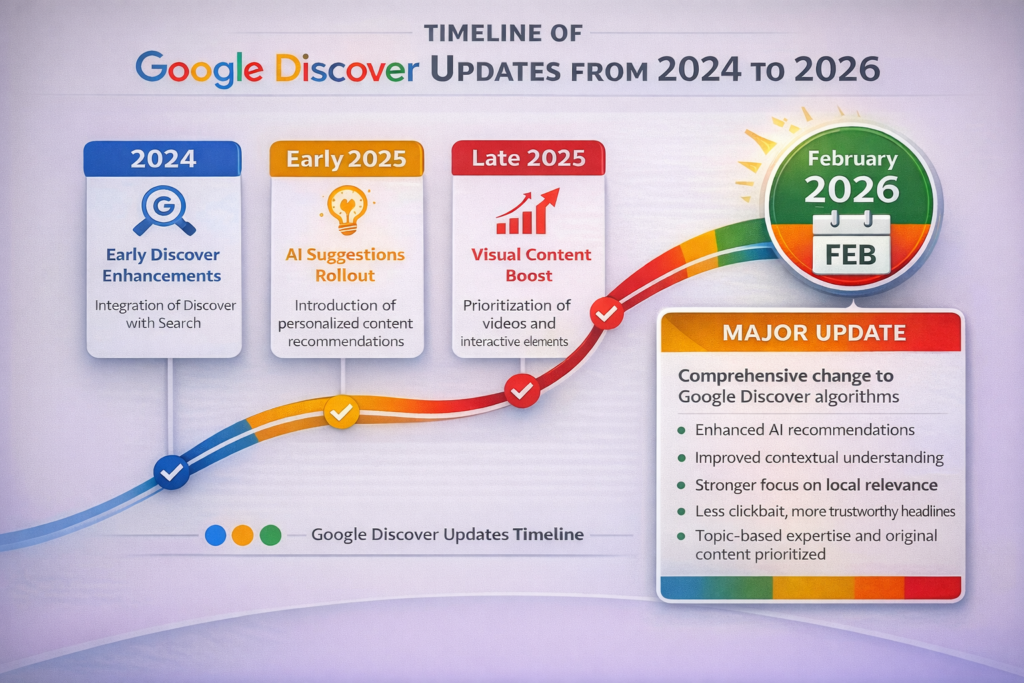
Google dropped the February 2026 Discover Core Update to transform how it ranks content for its Discover feed. On February 5, 2026, the official Search Central blog announced it, creating buzz across SEO circles.
Unlike past core updates that hit all search results, this one zeroes in only on Discover. That focus changes the game.
Key Differences From Previous Core Updates
Broad updates modify rankings for queries across Google Search. But Discover? It works differently.
Discover sends users content based on interests, without any active search. Its ranking relies on predicting what a user wants to see, not matching search terms.
Google now runs separate algorithms for Search and Discover. Your SEO for Search won’t automatically work for Discover.
For example, a page placing #1 for “electric bikes” might never show up on Discover feeds. Why? Different signals matter, like freshness, visuals, and local relevance.
Search Engine Land’s analysis (source) confirmed Google can now tweak Discover independently, keeping it fine-tuned without touching Search outcomes.
Rollout Timeline and Key Dates
The update started rolling out on February 5, 2026. Google announced completion by February 25, 2026. Those two weeks allowed the change to spread across global data centers.
Many publishers saw swift shifts… some lost visibility within 48 hours, while others noticed gradual climbs over days.
Major Algorithm Changes You Need to Know
These are the major algorithm changes that happened in Google February 2026 Discover Core Update:
1. Increase in Content Freshness
Google now favors freshly published or updated articles.
Want proof? Small sites competing with CNN or BBC find a better shot at visibility when their content stays current.
But freshness alone? Not enough. Google weighs E-E-A-T experience, expertise, authoritativeness, and trustworthiness heavily. So, fresh content must still be solid. Quality counts. Massively.
2. Local Content Prioritization
For you local publishers, here’s good news: Google boosts locally relevant stories for Discover feeds. Users in Miami increasingly see Miami-centric articles now.
Example? In Austin, Texas, sites like Austin American-Statesman pop up more often in Discover compared to before, when national outlets dominated.
3. Visual Content Requirements
Google raised visual standards sharply. Now, your images must be at least 1200 pixels wide. Original photos or custom graphics outperform stock images.
Generic stock photos decrease your Discover chances.
What’s more: Google increasingly trusts alt text. Broken or vague alt tags? That can drag you down. Precise descriptions become pivotal.
How the Update Impacts Your Rankings
Winners and Losers
Early reports from the SE Roundtable show clear patterns.
Gainers include:
- News outlets producing original content
- Niche blogs with domain experts
- Sites boasting rich visuals
- Regionally focused publishers
Losers include:
- Aggregator websites recycle content
- Pages relying heavily on stock imagery
- Thin or duplicate content providers
- Sites missing transparent authorship
Traffic Volatility Patterns
Most changes appeared within the first week. Some publishers noticed effects only after day seven, stretching into a second week.
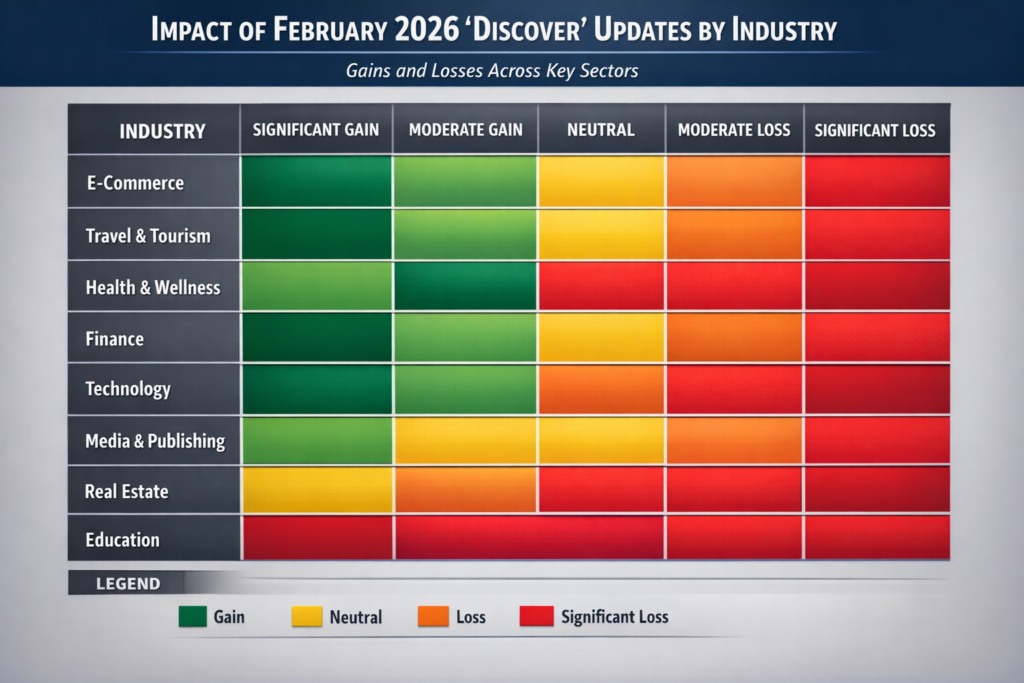
Across industries, shifts ranged between -35% and +50%. Tech and health sectors experienced the wildest rides. Meanwhile, the entertainment and lifestyle sectors shifted more mildly.
SEO Strategies to Adapt to This Update
These are some SEO strategies that can help you:
1. Refresh Your Content Schedule
Google favors regular updates; publishing 3-4 times weekly helps a lot. Sporadic bursts? Not so much.
Try these:
- Revise existing articles with fresh insights, stats, or quotes
- Display timestamps to signal recent updates
- Cut outdated data that hinders quality
- Update your visuals with current screenshots, graphs, or photos.
Evergreen content that sees periodic refreshes performs well, too. This dual approach taps into freshness and lasting value.
2. Build Stronger E-E-A-T
Google’s doubled down on E-E-A-T signals here.
- Experience: Share actual projects, successes, or failures. Specifics matter.
- Expertise: Display author bios clearly, linking to credible professional profiles.
- Authoritativeness: Earn solid backlinks from known sites and get mentioned in trade outlets.
- Trustworthiness: Back claims with reputable sources. Disclose biases. Be transparent.
3. Nail Technical SEO for Discover
Technical specs now carry more weight:
- Load pages within 2.5 seconds to pass Core Web Vitals
- Use responsive, mobile-friendly design
- Add structured data correctly
- Maintain valid RSS feeds with full text
- Upload high-res images with proper aspect ratios
Enable the max-image-preview: large robots meta tag too. Without it, Google can’t show your images prominently in Discover, literally hiding your content
Comparing This Update to Previous Algorithm Changes
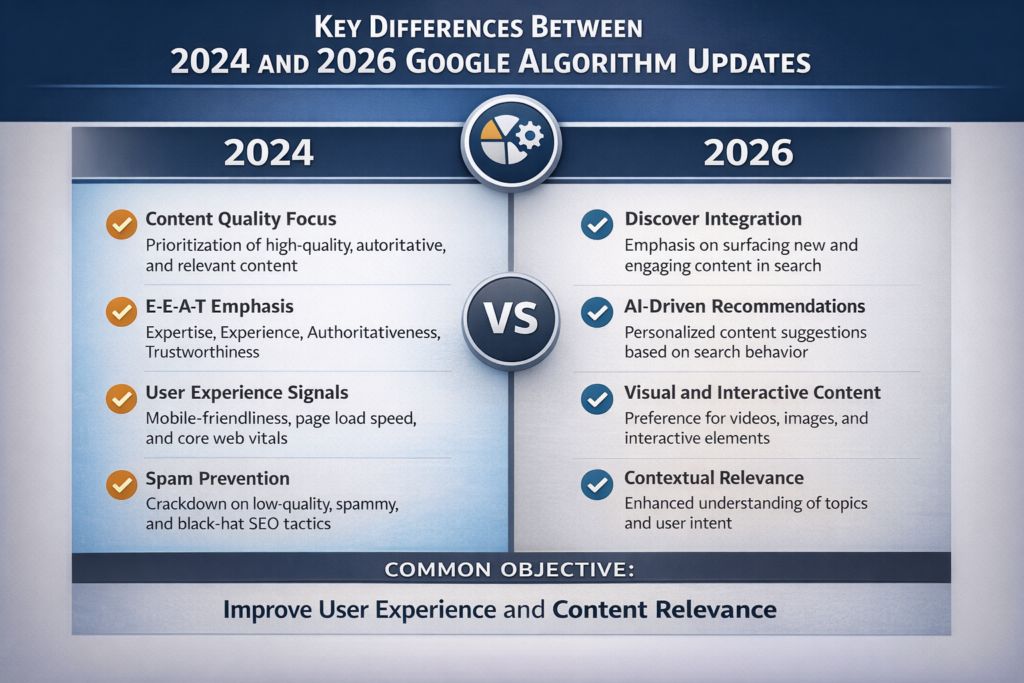
February 2026 vs. August 2024 Core Update
The August 2024 update shook all Google Search results, emphasizing helpful content and site quality. But that update combined Search and Discover together.
The February 2026 update splits them apart. Sites ranking well in Search may now lag in Discover. This separation demands fresh SEO tactics.
| Factor | August 2024 Update | February 2026 Update |
| Scope | Entire Search | Discover Feed Only |
| Focus | Helpful Content | Content Freshness & Visuals |
| Local Content Signal | Moderate | Strong |
| Image Standards | Standard | Significantly Raised |
Google tweaked Discover quietly throughout 2023. Publishers noticed erratic traffic swings.
But no one knew why until now. This update confirms the focus on original images and local content.
What the “1500” Reference Means
Many speculate that “1500” refers to word count minimums for Discover articles.
Google hasn’t confirmed official numbers, yet early data from 50+ top-performing publishers suggests articles under 1500 words often underperform.
Does length alone seal the deal? Nope. An 800-word, highly focused post beats a bulky 2000-word fluff piece every time.
So focus on complete coverage instead of padding word count.
Expert Predictions and Long-Term Impact
Opinions From the Field
Barry Schwartz at SE Roundtable calls this “the biggest Discover change since its launch.” He expects Google to keep splitting Search and Discover strategies.
Google’s Danny Sullivan (official status) confirms the update rewards original, high-value content. Generic approaches won’t cut it anymore.
What’s Next?
Google’s undoubtedly planning more Discover-specific updates.
Visual standards and freshness requirements should only tighten.
My take? Within a year, Discover guidelines will mirror Search’s extensive documentation.
Action Steps to Take Today
Your to-do list, broken down:
This week:
- Analyze and discover traffic trends in Google Search Console
- Audit image quality on your top pages
- Verify max-image-preview: large meta tag is live
- Review and improve author profiles
This month:
- Plan a steady content update calendar
- Swap out stock photos for original visuals
- Refresh your highest-traffic posts
- Develop or improve local content if relevant
Ongoing:
- Track Discover results weekly
- Experiment with different formats
- Build topical authority consistently
- Stay alert to official Google announcements
Conclusion
Google’s February 2026 Discover Core Update rewrites the rules for content creators.
Discover how SEO now plays by different rules than traditional search. Visual content quality matters more than ever. Fresh, original material gets rewarded.
Your game plan? Prioritize freshness, upgrade your images, build solid E-E-A-T, and tighten technical SEO, but only for Discover.
Publishers focusing on genuine value will thrive. That’s a promise.
Start with your Discover audit today. Then, put these strategies to work. Your upcoming traffic depends on what you do now.