
Introduction
Search is shifting fast. People ask full questions now, and answer engines respond without sending users to a results page. That change makes Answer Engine Optimization a core part of staying visible because these systems choose one source, not ten.
SEO still counts, but it doesn’t guarantee you’ll be featured in an AI-generated answer. That’s where smart AEO search optimization comes in. You’re aiming to become the safest, clearest, and most useful response.
The move from SEO to AEO isn’t a trend. It’s a new stage in search behavior. If your content isn’t structured well or doesn’t offer reliable information, answer engines skip it. When people compare AEO and SEO, the distinction is simple: ranking is no longer required, but accuracy and clarity are.
Marketers who treat this shift seriously focus on giving answer engines what they need. That includes obvious facts, clean formatting, and context that removes guesswork. This is the true foundation of AEO: no noise, no tricks.
What Is Answer Engine Optimization?
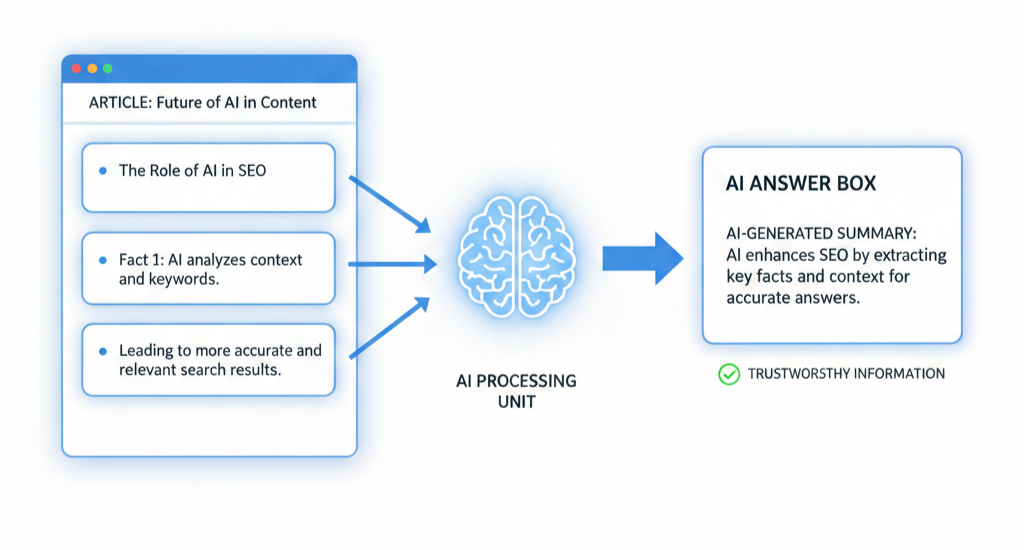
Answer Engine Optimization is the process of shaping your content so AI systems can read it clearly and use it as a final answer. It focuses on facts, structure, and context instead of keyword repetition. If an answer engine can extract your information without uncertainty, you’re more likely to be selected.
AEO isn’t about writing for machines. It’s about removing confusion. Short explanations, clean headings, and verified details help the system trust your page. When you build content this way, you earn the recommendation instead of hoping for a click.
Shift From SEO to AEO
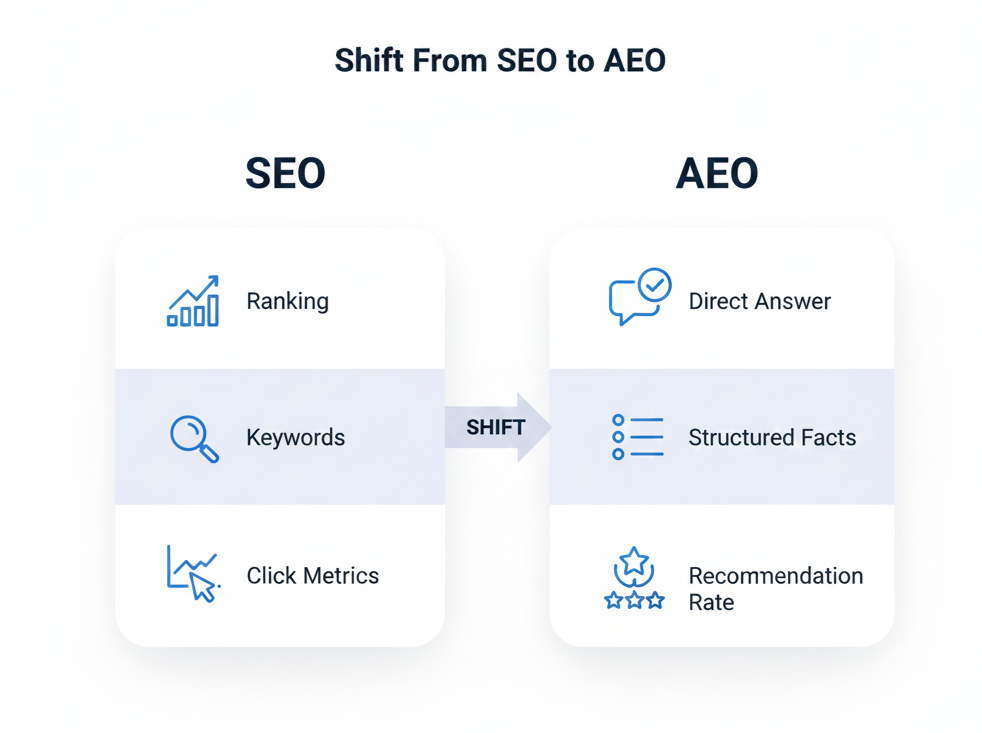
Search engines used to reward pages that were simply well-optimized. Now the priority is accuracy, clarity, and how fast an AI system can verify your information. This shift from SEO to AEO isn’t cosmetic. It decides whether your brand appears in the answer at all.
SEO still helps people find you. AEO decides if you get featured when users never even see a results page. That’s the real turning point. If your content doesn’t provide direct answers, answer engines move on instantly.
Here’s the straightforward comparison:
AEO vs SEO
| Point of Difference | SEO | AEO |
| Goal | Rank on search pages | Become the chosen answer |
| User Intent | Short queries | Full questions |
| Content Focus | Keywords + links | Facts + structure |
| Metrics | Clicks, impressions | Answer selection, accuracy |
| Output | List of results | One recommended answer |
| Strength | Helps with visibility | Helps with authority |
| Weakness | Depends on ranking competition | Depends on clarity and trust |
What is AEO optimization?
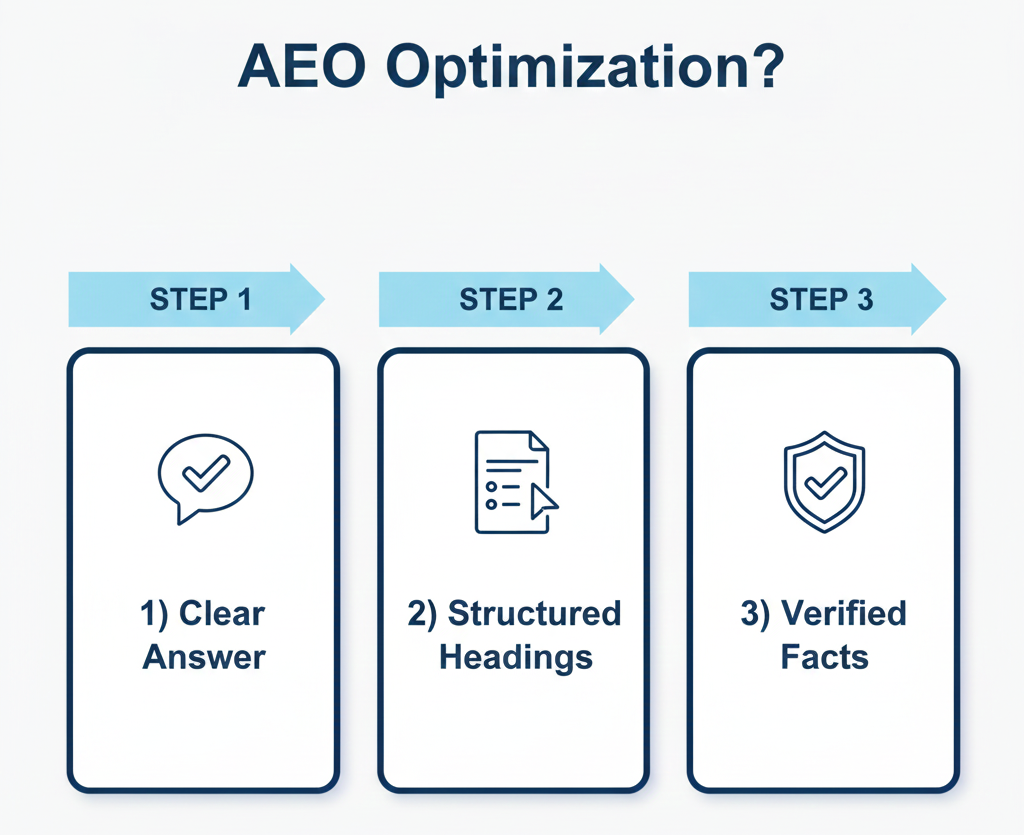
AEO search optimization is the practical, hands-on process of making your content easy for answer engines to understand, verify, and use. Think of it as removing every point of friction that could make an AI skip your page.
It starts with clear answers. If a user asks a question, your content should deliver the response in one or two direct lines before adding any context. That gives the system a clean piece of information to pull from.
Next is structure. Headings, subheadings, lists, and short segments help search engines identify what matters. When content is scattered or written in long, unfocused paragraphs, extraction becomes harder and confidence drops.
Reliable facts also matter. Dates, sources, numbers, and definitions are all anchors that help the model validate your page. Without them, the system may downgrade the content because the information feels uncertain.
In simple terms, AEO search optimization turns your content into something answer engines trust quickly. The cleaner the signal, the stronger your chances of becoming the recommended source.
How Does AEO Work?
AEO works by helping search engines understand your content without guessing. These systems scan pages, break them into small pieces, and look for signals that confirm whether the information is accurate, current, and easy to use.
Answer engines don’t guess blindly. They follow a clear sequence to decide whether your content is safe to use as an answer. Here’s the actual process, step by step.
Step 1: Understand the User’s Full Question
The system breaks the query into intent and context. If the question is vague, it predicts the most likely meaning. If it’s specific, it matches the exact requirement.
Step 2: Scan Content Sources
The engine searches across web pages, data sets, and trusted references. It’s not looking for keywords; it’s looking for clear, factual statements that match the question.
Step 3: Extract Relevant Information
Once a page looks useful, the system isolates the exact part that answers the question. Short, direct lines are favored because they’re easier to pull cleanly.
Step 4: Check Accuracy and Consistency
This is where many pages fail. The model cross-checks your statement against multiple sources. If your content conflicts with others or feels incomplete, it gets pushed aside.
Step 5: Evaluate Confidence Score
The system assigns a confidence rating based on clarity, structure, and factual reliability. High-confidence segments move forward. Low-confidence ones get discarded.
Step 6: Build the Final Answer
The model forms a response using the content it trusts most. It may quote directly, rephrase, or combine pieces from multiple pages, but only if the pages are consistent.
Step 7: Decide the Recommendation
This is the crucial moment. If your content is the clearest, most reliable, and easiest to verify, you become the recommended source. If not, the engine picks another page.
Step 8: Store Signals for Future Queries
Answer engines remember patterns. If your site consistently gives clear answers, your content gets reused more often. If it confuses the model, your chances drop over time.
This is the real inner workflow behind AEO.
Want your content chosen as the answer? Start optimizing for AEO today.
Important AEO Strategies for Marketers
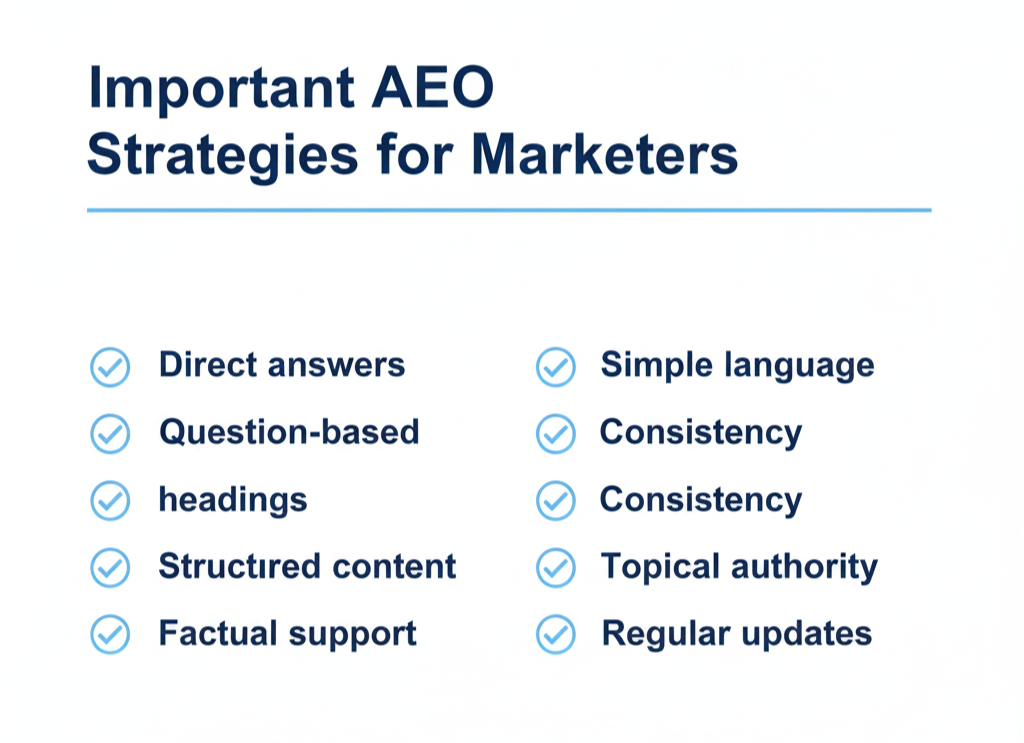
Most teams overcomplicate AEO. Here are important strategies that actually work.
1. Give the Direct Answer First
Start with a straight, one-to-two sentence answer before adding context. Answer engines grab the cleanest line they can find. If your main point sits buried in a long paragraph, you lose the opportunity to be selected.
2. Use Question-Based Headings
Write headings the same way users phrase their queries. This helps models match your content to a question instantly. It also removes guesswork for extraction.
Example: Instead of “Benefits of AEO,” use “Why Does AEO Matter for Marketers?”
3. Structure Every Topic for Easy Extraction
Short sections, clear bullet points, and clean formatting are not for decoration; they are used to break up content into chunks by answer engines. The simpler the structure, the easier it is for the system to identify the right piece.
4. Support Claims With Facts or Clear Logic
AI tools don’t trust vague statements. Dates, stats, definitions, and straightforward explanations increase confidence scores. Even a single verified fact can push your content ahead of a competitor.
5. Keep Language Simple and Exact
Avoid dramatic claims or generic filler. Answer engines prefer grounded, plain-language explanations because they reduce misinterpretation.
6. Maintain Consistency Across Pages
If one page says X and another says Y, confidence drops. Internal contradictions can push your entire domain lower in answer selection priority.
7. Strengthen Topical Authority
Publish related topics around the same theme. When models see a strong cluster, your credibility rises and extraction becomes more likely.
8. Update High-Value Pages Regularly
Outdated information reduces trust. Freshness signals matter because answer engines re-check facts often.
How Is AEO Different Than SEO?
The difference is narrower than most people think but far more impactful. SEO helps pages rank. AEO helps content get selected as the answer.
SEO focuses on keywords, links, and engagement signals. AEO focuses on directness, factual clarity, and how confidently an AI can use your content without rewriting the meaning.
If your content sounds clean and verified, answer engines prefer it. If it feels vague or messy, SEO strength won’t save it.
What Are AI Hallucinations And How Can You Avoid Them?
To avoid being misrepresented:
- Give exact statements
- Add context for topics that usually confuse readers
- Keep facts consistent across your site
- Avoid ambiguous language or open-ended claims
When your content removes uncertainty, the model stops guessing.
Struggles for Appearing in Answer Engines
Many brands struggle because:
- Their content is too broad
- The main answer is buried or unclear
- Pages lack factual anchors
- Headings don’t match real questions
- Paragraphs are long and unfocused
- Information conflicts across the site
- Updates are rare
When answer engines sense confusion, they skip the page entirely.
Factors That Matters The Most for ChatGPT Recommendations?
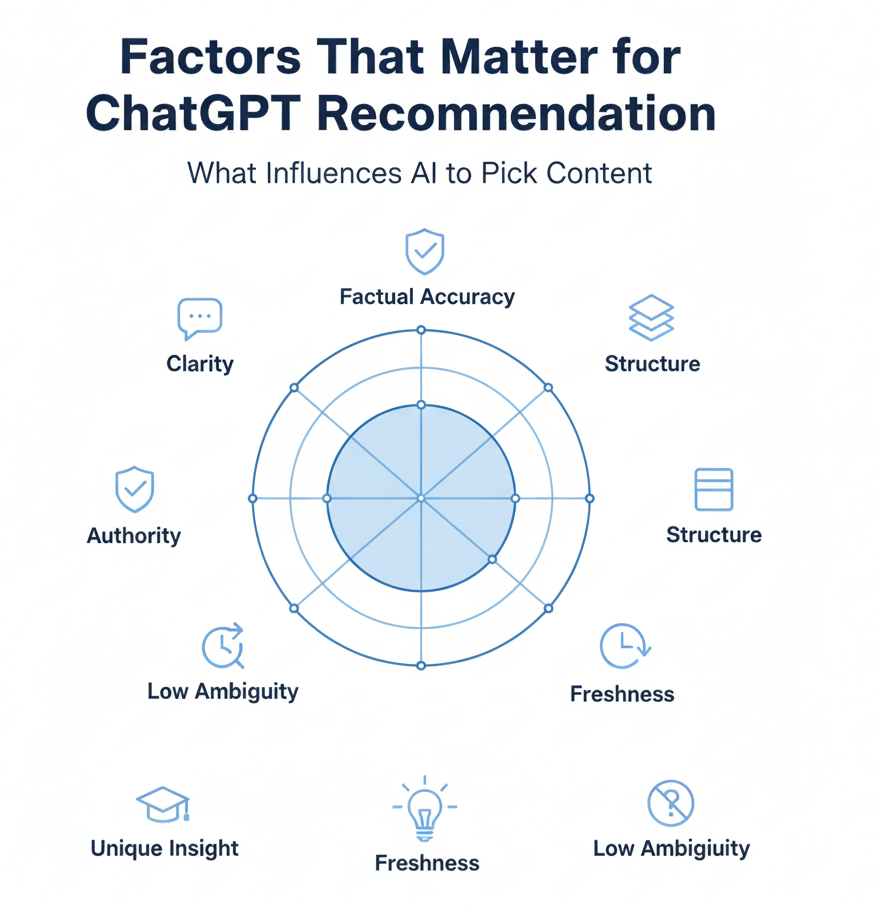
ChatGPT doesn’t guess which source to recommend. It follows a set of signals that determine trust, clarity, and usefulness. These are the factors that decide whether your content gets selected.
1. Clear, Direct Answers
If your content delivers the main answer in one clean line, ChatGPT can pull it instantly. Anything buried or vague lowers your chances.
2. Strong Factual Signals
Dates, numbers, definitions, and verified claims help the system confirm accuracy. Pages with weak or unsupported statements rarely get highlighted.
3. Consistent Information Across Your Site
Conflicting pages create doubt. ChatGPT checks for alignment. When everything matches, your credibility score rises.
4. Clean Structure
Short sections, logical flow, scannable formatting. The model relies on structure to understand meaning. If the layout is chaotic, extraction becomes harder.
5. High Topical Authority
If you publish multiple pieces around the same topic, ChatGPT sees your site as more reliable.
Isolated content doesn’t build enough trust.
6. Fresh Updates
Outdated content loses confidence quickly. Regular updates help ChatGPT treat your page as the safer choice.
7. Unique Insight
The system prefers content that adds clarity or perspective instead of repeating generic advice. If your page sounds like everything else online, it blends in and rarely gets selected.
8. Low Ambiguity
ChatGPT avoids recommending pages that can be misinterpreted. Clear wording, straightforward logic, and tight explanations reduce confusion.
9. No Over-Optimization
Content that feels stuffed with keywords or forced signals gets downgraded. Natural language wins because it’s easier for the system to interpret accurately.
10. Stable Context
If you explain a topic without drifting or expanding unnecessarily, ChatGPT trusts your content more. Focused pages outperform scattered ones.
Conclusion
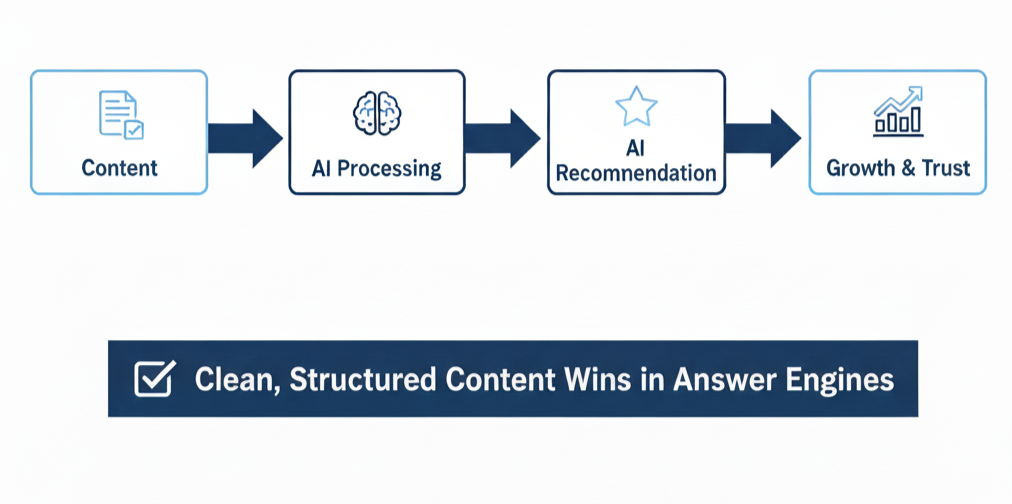
AEO isn’t here to replace SEO. It sits above it and decides whether your content earns the answer spot when users never reach a search results page.
The brands winning this shift aren’t producing more content. They’re producing cleaner, more reliable pages that answer real questions directly. That’s the core of Answer Engine Optimization: becoming the source these systems trust.