Introduction
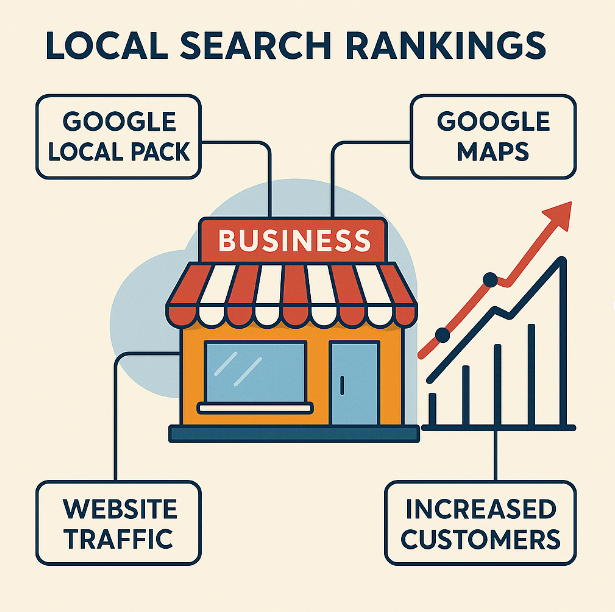
Being at the top of search results nowadays is particularly important for businesses that serve local clients. Establishing local links, a powerful but frequently overlooked element, is usually what determines local search dominance, even though technical SEO and on-page optimization form the basis.
Those days are gone when any backlink was good enough. Now, Google’s algorithms are becoming more advanced, relying on authority, relevance, and trust. For local businesses, the implication is creating a map of geo-relevant backlinks—links that inform search engines that your business is an authoritative, trustworthy entity in its particular geographical region. It is not about getting a few additional clicks; it is about communicating authenticity and expertise that really fuels top listings in local search results.
This in-depth guide will go in-depth into practical link-building strategies meant to make your business shine. We’ll cover how community engagement link building can organically draw in quality connections, good local sponsorship deals, the use of local PR links for increased exposure, and more. At the end of it, you’ll have a step-by-step guide to obtain local SEO links Google approves of, eventually making your business more visible and attracting more customers through your front door.
1. The Value of Local Links in 2025
With the ever-changing dynamics of search engine optimization, what was effective before may no longer be so in the present. For local businesses, though, there is one factor that remains an influential ranking signal: quality local link building. In 2025, only the importance of geo-relevant backlinks has grown more, thanks in large part to the modifications in Google’s algorithms and the increasing power of AI in search.
Local links are strong recommendations from other quality websites in or around your community. Consider them as online testimonials. Search engines like Google are alerted that your company is a legitimate, helpful, and authoritative member of the community when a local news website, organization, or other respectable local business links to your website. Because Google wants to show the most reliable and pertinent companies in the user’s area, this is particularly important for local searches.
How Is This So Important in 2025?
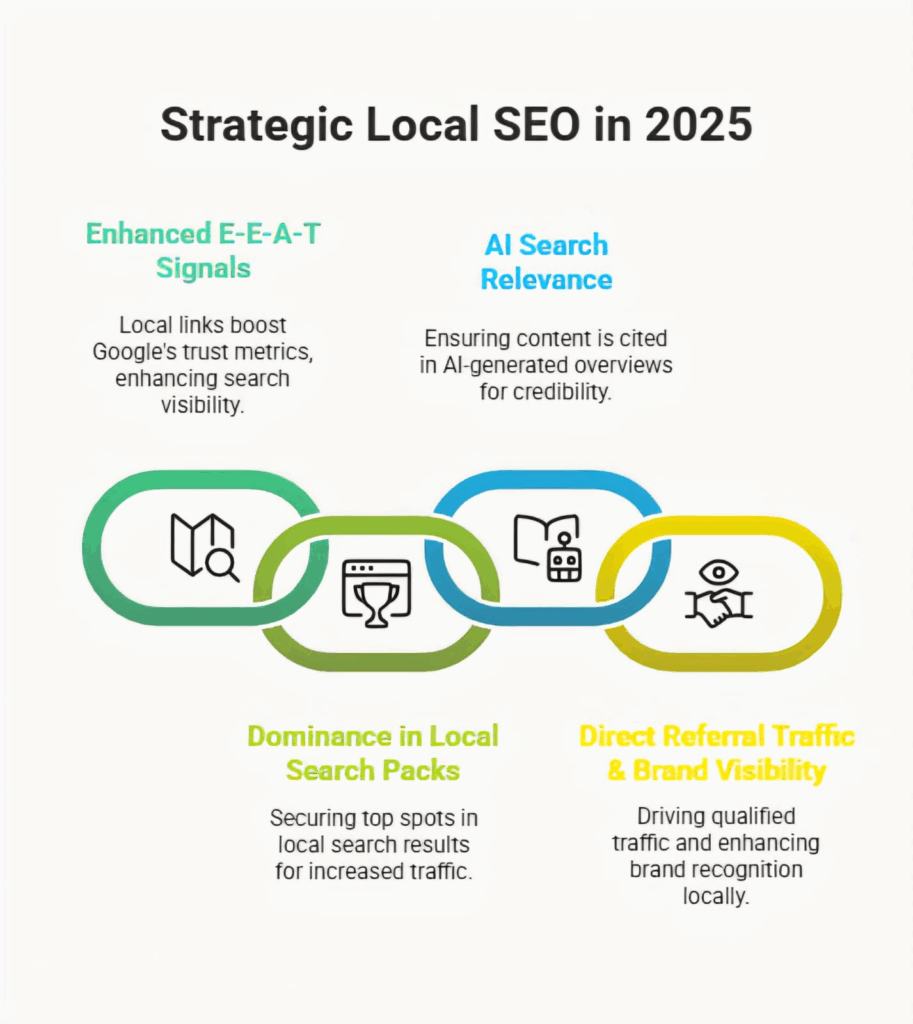
a. Increased E-E-A-T Signal Strength
Experience, expertise, authoritativeness, and trustworthiness (E-E-A-T) are even more important to Google. Local links are a definite sign of your company’s authority and reliability in your niche and region, especially if they come from very reputable local websites.
b. Dominance in Local Search Packs
The highly desirable “local pack” (or “3-pack”) on the page of Google search results is where the majority of local search traffic is received. A strong profile of local SEO links hinges hugely on your opportunity to be shown within these prominent positions, making your company instantly discoverable by potential clients.
c. AI Search Relevance
As AI search engines head towards synthesizing in-depth answers, they favor content from credible, cited sources. A solid local link-building effort makes your site an extremely credible one, more likely to see your content (or “chunks” thereof) included and referenced in AI-generated summaries. This changes the target of optimization from solely page-level relevance to also encompass passage-level and citation-worthiness.
d. Direct Referral Traffic & Brand Visibility
In addition to SEO, such links direct quality referral traffic from local engaged audiences. A local chamber of commerce link or a community blog link can introduce your business to new customers who are already immersed in local content, raising your brand’s visibility and recognition at the local level.
2. Community Involvement Link Building
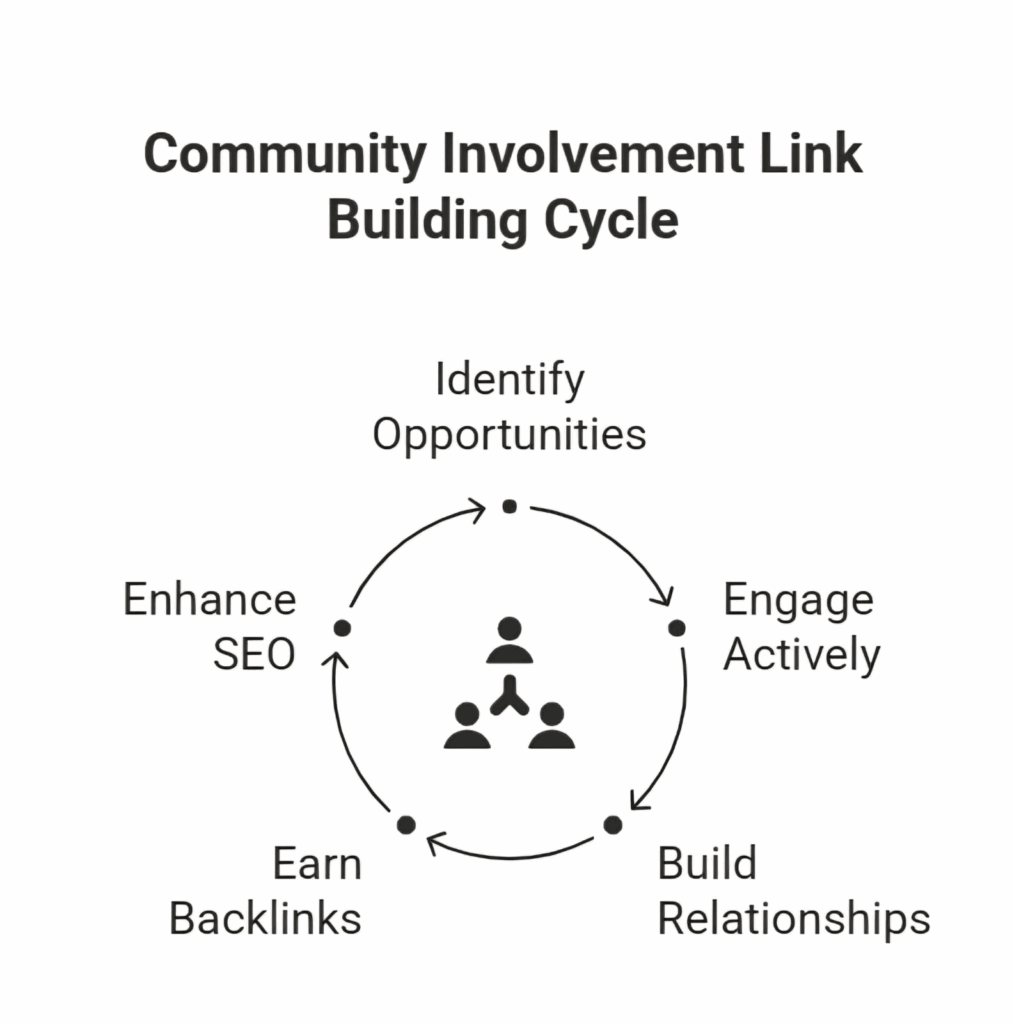
Outside of standard outreach, possibly the most sincere and powerful method for creating local SEO links is through real community engagement. When your company takes part in local events, sponsors neighborhood programs, or joins community organizations, you’re not only generating goodwill; you’re developing organic opportunities for valuable community backlinks. Such links tend to be strongly trusted by search engines since they are representative of real-life relationships and devotion to the area.
This is how you work with your community to create a solid backlink profile:
a. Local Non-Profit Organisations or Volunteer Programs
Contribute your time, money, or skills to local nonprofits, homeless shelters, or cleanup initiatives. The “Our Supporters” or “Partners” sections of the majority of nonprofit organizations websites probably contain links to participating or contributing companies.
Action Tip:
Find neighborhood organizations whose values mirror those of your brand. Contact their marketing or development departments and ask about volunteer possibilities and the likelihood of being listed there.
b. Local Event Participation
Join in local clubs, business networking groups, or even specialized hobby clubs.
Action Tip:
Look at local city event calendars for future events and try participating in them.
c. Host Local Workshops or Free Classes
If your company has know-how (e.g., a bakery providing a complimentary bread-making course, a computer store with a “smartphone essentials” seminar), invite people to free instructional events. Community centers, libraries, or event calendar sites tend to link to these teaching aids.
Action Tip:
Promote these sessions on local online community noticeboards and neighborhood community noticeboards, which also offer linking options.
d. Join and Take Part in Local Clubs and Associations
Join local clubs, business networking groups, or even specialized hobby clubs. Most of them maintain online member directories where your business can obtain a link. Participating actively tends to result in more visible mentions.
Action Tip:
Don’t just become a member; attend meetings and projects actively in order to forge real relationships.
e. Provide Testimonials for Local Businesses
If you are utilizing services from other local companies (graphic designers, suppliers, etc.), be willing to provide a testimonial for their site. They may be willing to add your company name and a link back to your site.
Action Tip:
Opt for businesses that complement, not compete directly.
By emphasizing real-world engagement, your company organically becomes a part of the local digital landscape, earning high-quality, geo-related backlinks that create trust and credibility in both local customers’ and search engines’ eyes.
3. Local Sponsorship and Donation Strategies
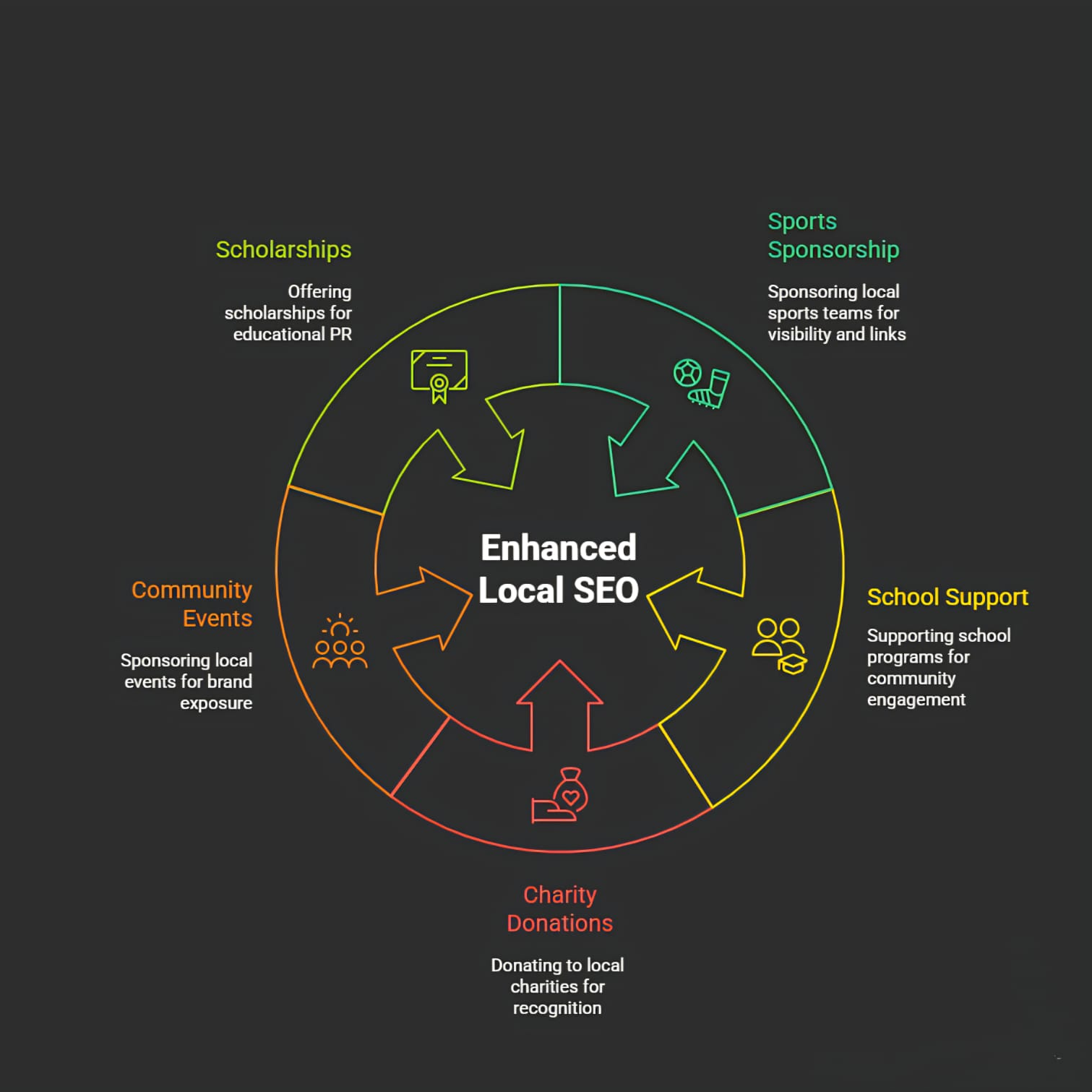
Aside from hands-on volunteerism, sponsorships and donations are also a strong way to promote local link building. These methods not only support local causes, which are much needed, but also project your brand strongly and enable you to gain highly sought-after community sponsorship links. These tend to originate from event pages, third-party “sponsor” pages of nonprofit organizations, or news coverage by local media, all of which possess authoritative value.
Here’s how to effectively use sponsorships and donations for geo-relevant backlinks:
a. Support Neighbourhood Sports Teams or Youth Leagues
On team websites, league lists, and event programs, local sports organizations—from adult leagues to school teams—frequently showcase their sponsors. This is an excellent means of reaching local families and gaining a direct link.
Action Tip:
Look for local teams or leagues that require sponsoring. Oftentimes, sponsorship levels have various levels of website recognition.
b. Support Local School Programs or PTAs
Schools are focal points in most communities. Sponsorship of school events, yearbooks, newsletters, or even specific academic programs may lead to name mention and affiliation on the school website or PTA websites.
Action Tip:
Meet with the school administrator or PTA to find out about sponsorship and recognition opportunities.
c. Donate to Local Charity Auctions or Fundraisers
Donating goods, gift certificates, or services to regional charity auctions, galas, or fundraisers can get your business a shout-out and a link on the event’s specially created webpage, usually with other solid local donors.
Action Tip:
Discover charities that are proactively engaged online and transparent about displaying their donors.
d. Sponsor Community Events and Festivals
Major local events such as music festivals, art festivals, holiday parades, or town clean-ups just about always feature a “Sponsors” page on their main website. More advanced sponsorships often give more prominent links and exposure.
Action Tip:
Working early with event organizers will earn you a better position and more time for your brand to shine.
e. Provide Scholarships or Education Grants
For companies that want to get established deep within the community and as experts, providing a local educational grant or small local scholarship can create local PR connections from the educational institution and local media announcing the award.
Action Tip:
Collaborate with a local high school or community college to set up the scholarship criteria and promotion.
Strategic local sponsorships and donations are an investment in your local community that pay back in twofold rewards: real goodwill and high-quality, geo-relevant backlinks that dramatically increase your local SEO links profile.
4. Local Resource Page Opportunities
One of the frequently unused goldmines for local SEO links is found in existing online local resource pages. These are hand-crafted lists, directories, or guides put together by local governments, community organizations, schools, or even enthusiastic local bloggers. They want to offer useful information to local residents and visitors, so they are extremely trusted sources for geo-specific backlinks. Getting on these pages not only offers an invaluable link, but it also puts your company directly in front of a very relevant local audience as well.
Here’s how to spot and discover local resource page opportunities:
a. Government & Chamber of Commerce Websites
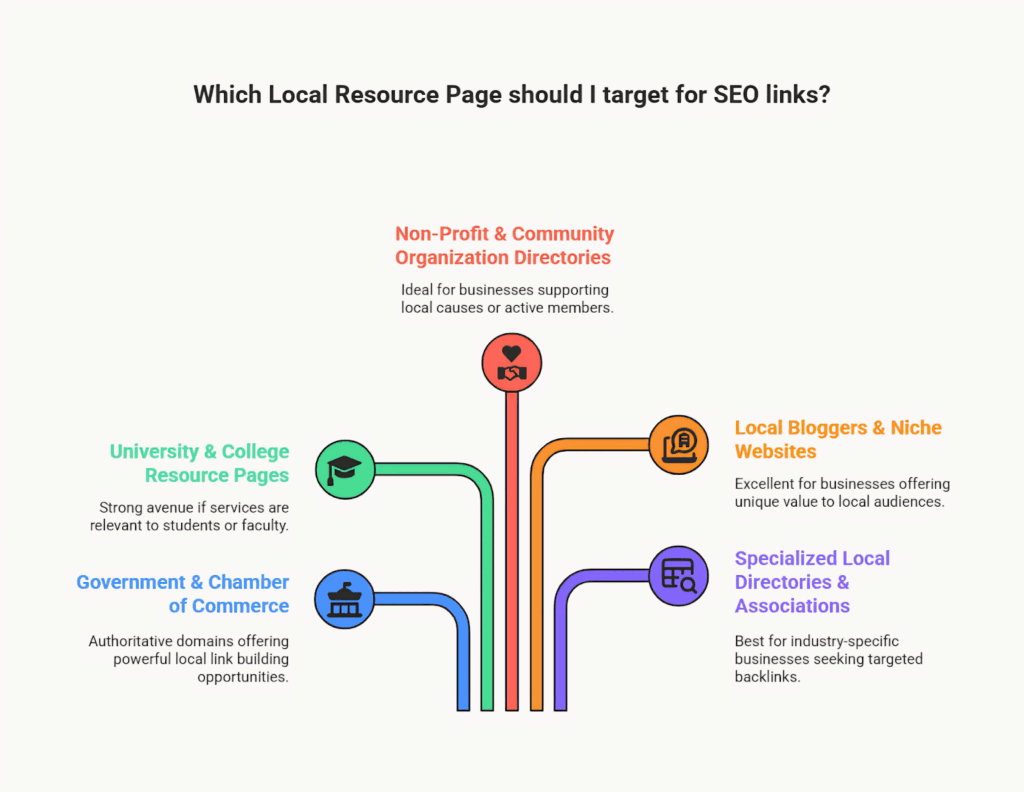
Numerous city sites, county sites, and local Chambers of Commerce have large directories of local businesses, services, or attractions. These are authoritative sites that can offer strong local link-building possibilities.
Action Tip:
Look at sections such as “Business Directory,” “Local Resources,” “Visitor Information,” or “Community Links.” If your business meets a category, this is a good place to contact and ask about listing requirements.
b. Local University & College Resource Pages
Universities frequently have sections on local businesses, student discounts, alumni services, or community resources. If your business provides a service for students or faculty, or you have alumni working for you, this is a good path to pursue.
Action Tip:
Check for pages named “Local Partners,” “Student Resources,” or “Community Services” on university websites.
c. Local Non-Profit & Community Organization Directories
Like Chambers, local charities, associations, and community centers often publish businesses that fund their cause, provide relevant services, or are members of the organization.
Action Tip:
List your business in any online directories they have and attend their events (as mentioned in earlier sections)
d. Niche Sites & Local Bloggers
There are also standalone towns and cities with standalone bloggers or small niche blogs that write about local food, entertainment, services, or events. These can prove to be good sources for local SEO links if your business has something genuinely useful for their readers.
Action Tip:
Search for “[Your Industry] association [Your City]” or “[Your Service] directory [Your City].” Read their content and propose your business as a worthwhile addition.
e. Specialized Local Directories & Associations
In addition to the general directories, search for special-purpose local directories specializing in your sector (e.g., local legal directories, health directories, artisan collectives). Sector-specific local associations may also provide member listings.
Action Tip:
Look up “[Your Industry] association [Your City]” or “[Your Service] directory [Your City].”
By tactfully acquiring and gaining listings on these true local resource websites, your company can significantly enhance its local link-building profile through high-quality, geo-specific backlinks that enhance search visibility and referral traffic.
5. Local PR and Media Outreach
Good PR isn’t something for global brands only; it’s a great weapon for local link building, particularly in the era of digital marketing. Building relationships with local media, journalists, and industry bloggers can create effective local PR links from very high-authority sources. Such links not only bring referral traffic but also convey strong signals of trust and prestige to search engines, which is vital for both traditional and AI-based search.
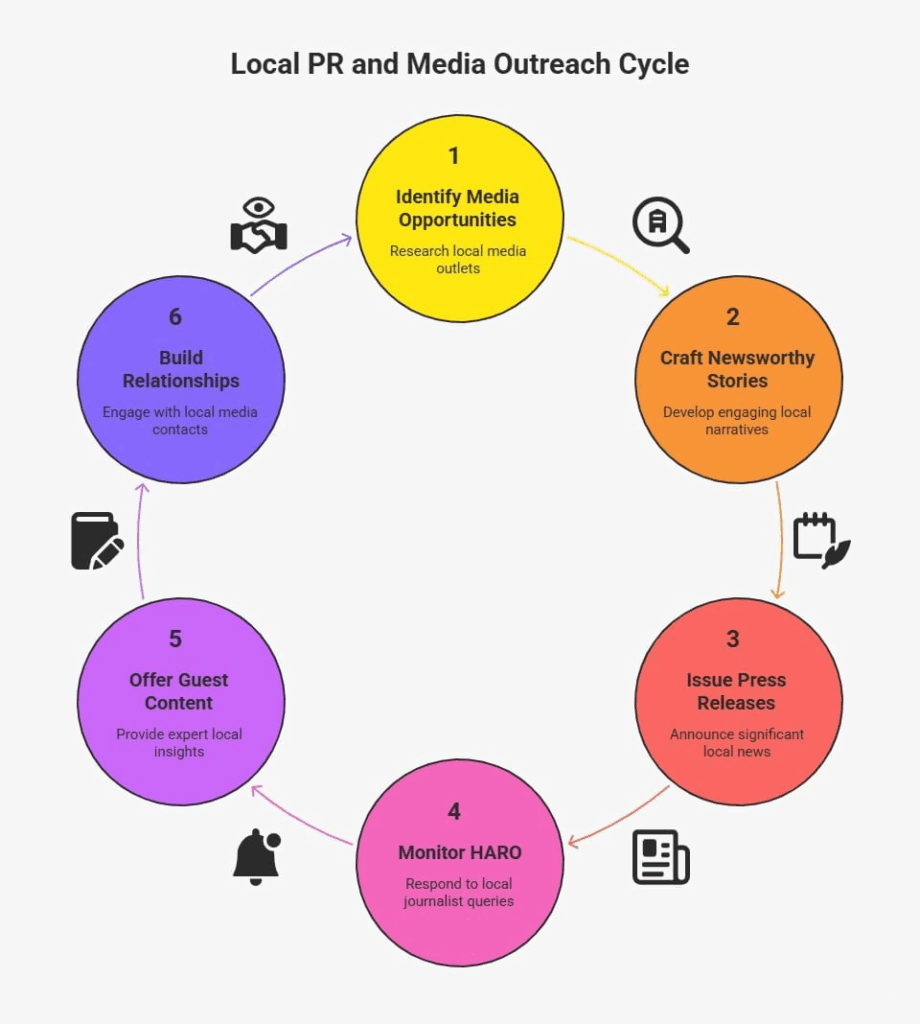
Following is the step-by-step procedure for creating an effective local PR campaign for backlinks:
Step 1: Discover Local Media Outlets
Investigate local print and online dailies, neighborhood news sites, local broadcast stations and radio, and the best local blogs. Look for sections dedicated to local business news, community events, or expert views.
Action Tip:
Create a media list with editor, reporter, or blogger contacts who cover topics of interest to your company. Tools like Google News alerts for local keywords can help you monitor opportunities.
Step 2: Develop Newsworthy Stories
Local media constantly seek stories that would appeal to their audience. Think more than just a product launch.
Consider:
a. Special Business Achievements
Anniversaries, substantial growth, and new recruits with local connections.
b. Community Impact
Your participation in local causes (as described in Sections 2 & 3), giving back through donations, or creating jobs in your community.
c. Expert Commentary
Portray yourself or your staff as local trend specialists within your profession. Provide quotes or comment on local economic changes, consumer trends, or industry information.
Action Tip:
Find a “local angle” in all that you do. A national trend can be localized by applying the right data or local twist.
Step 3: Publish Compelling Press Releases At Appropriate Time
While not all announcements need to go out as a press release, significant news can be formally announced.
Action Tip:
Release to your local targeted media list and use local online press release services with a priority on those that provide do-follow links.
Step 4: Monitor HARO (Help a Reporter Out) for Local Requests
Join HARO alerts. React quickly and professionally if your knowledge complements a local query. If your input is utilized, you’ll frequently receive a useful local PR link.
Action Tip:
Sort through HARO questions by keywords about your location or industry to find matching opportunities in a snap.
Step 5: Provide Guest Content or Expert Op-Eds
Certain local news websites or top blogs could publish guest posts or opinion columns by local business owners. This allows you to share your credibility and earn an expert backlink in the author bio.
Action Tip:
Introduce a topic that is genuinely useful or insightful for the local audience… Don’t use promotional language
Step 6: Relationship Building
Engage with local journalists on social media, share their articles, and genuinely connect with them. By actively reaching out to local media and sharing your business’s compelling story, you can initiate a potent chain of local PR links that increase your brand’s authority and strongly influence your local SEO links profile.
6. Industry and Local Business Partnerships
When local companies within the same niche support one another, it sends strong trust signals to search engines and can significantly improve your local SEO links profile.
This is how to develop strategic collaborations for link building:
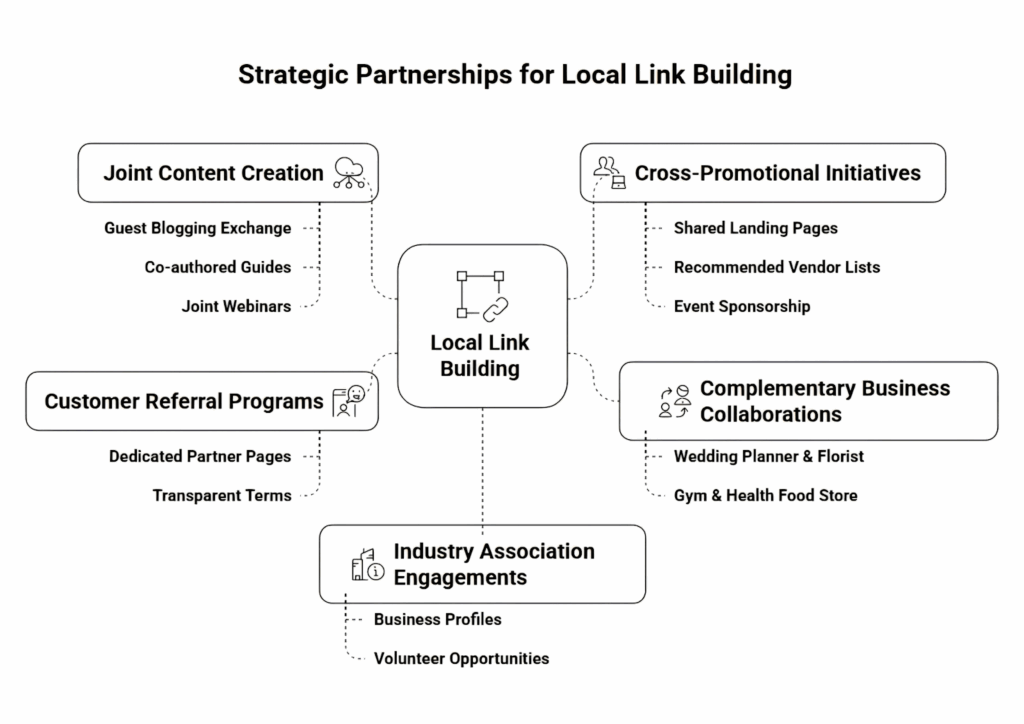
a. Complementary Business Collaborations
Find nearby companies that provide complementary goods or services but have the same clientele.
Action Tip:
Take into account companies that your clients might need either before or after your service. Make a clear, mutually beneficial proposal to them.
b. Joint Content Creation
Content writing can be done in partnerships. Create content with a partner business.
It may be:
- Guest Blogging Exchange:
You write a guest post for their site, and they do the same for yours. This is an easy, contextual link.
- Guides or e-books:
Create a useful resource that is hosted on one or two websites and has two-way linking.
- Webinars or Workshops:
When appropriate for your specialty, co-host an online or offline presentation and mention one another on event pages and related materials.
Action Tip:
Write about subjects that actually benefit both of your audiences and have natural opportunities for linking.
c. Customer Referral Programs
Create official referral programs through which partners refer clients to one another. These programs are often a special page on their website that lists valued partners, including a direct local SEO link.
Action Tip:
Make the terms of the referral clear and be transparent with your customers.
d. Cross-Promotional Initiatives
Seek opportunities to cross-promote one another online. This could include:
- Shared Landing Pages: For a co-promotion or discount.
- Suggested Vendor Lists: Put each other on the “Partners” or “Recommended Vendors” pages.
- Event Sponsorship: Ensure that both companies are mentioned and connected on the event’s official page if they are supporting the same local event.
- Event Sponsorship: If both businesses are sponsoring the same local event, make sure both are listed and linked on the official page of the event.
Action Tip:
Make all cross-promotion activities include obvious, natural, and useful links.
e. Industry Association Engagements
Through broad discussion, building closer relationships with certain local industry associations may bring the creation of specialized business profiles or “featured member” pages with links. Active involvement can position your business as a go-to resource.
Action Tip:
Join a committee or volunteer to give a speech at an association event in order to expand your visibility and link-building opportunities.
Constructing these geo-relevant links in collaboration with partners builds a sturdy, well-connected web of local credibility, which serves to inform Google that your business is a highly respected and integral component of the local economic life.
7. Local Event-Based Link Building
Local events, if you’re planning, sponsoring, or merely attending, offer a rich and underutilized means of local link building. They’re extremely targeted, time-limited chances to accumulate community backlinks from event websites, local press articles, attendee lists, and surrounding promotions. The trick is to organically place your business within the event’s online ecosystem, turning physical interactions into digital signals of authority and strongly contextual local SEO links.
Here’s how to discover local events for maximum link-building effect:
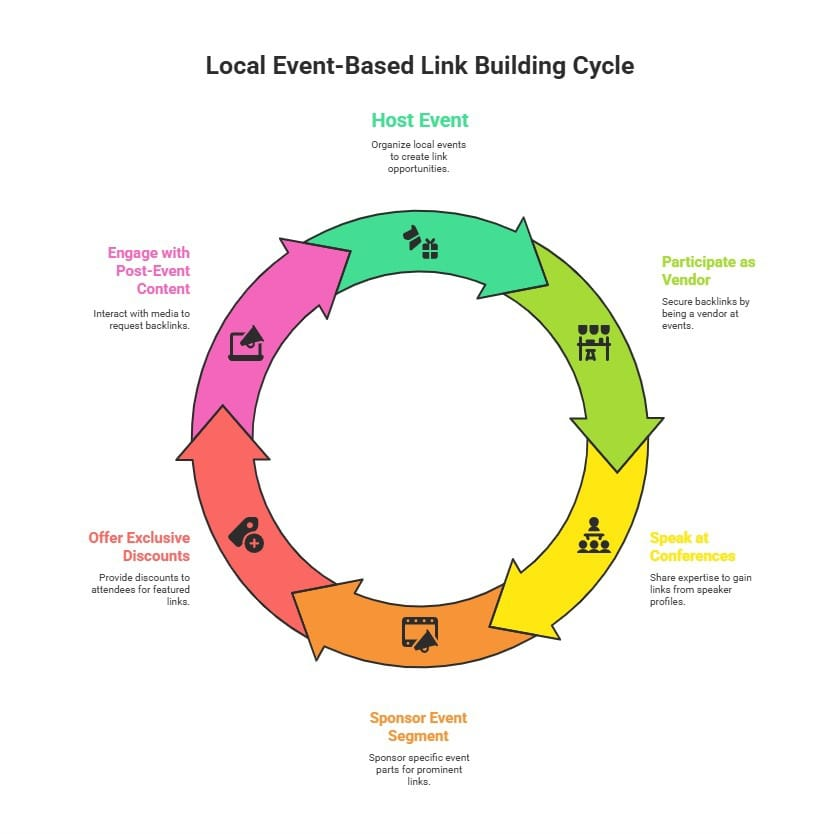
Step 1: Host Your Own Local Event
From grand opening and anniversary events to product launches or free workshops (as touched on in Section 2), staging your own event generates many link opportunities.
Action Tip:
Market your event on local event calendars, community websites, and local news sites. Get attendees and local partners to link to and share your event page. Follow with post-event roundup pieces that can also generate links.
Step 2: Participate as an Exhibitor or Vendor
On their official websites, a number of regional fairs, expos, trade shows, and festivals list their exhibitors or vendors. Gaining a strong, geo-relevant backlink is simple with this technique.
Action Tip:
Make sure your website is clearly linked from their participant page, and ask about their online listing procedure when you apply.
Step 3: Attend Local Gatherings or Conferences
Offer to present at community conferences, Chamber of Commerce events, or local industry meetups if you or someone on your team has knowledge to share. A bio and a link to your company website are typically included in speaker bios and event schedules.
Action Tip:
Pitch good topics to event organizers far enough in advance. Promote your speaking engagement actively, linking back to the event page, which can then reciprocate.
Step 4: Support a Particular Award or Event Segment
Consider sponsoring a specific component of a larger event, such as a stage, a competition, an award, or a particular activity, as opposed to just the event itself (discussed in Section 3).
Action Tip:
Search for smaller, very relevant opportunities in major events that have distinct, dedicated recognition and linking.
Step 5: Offer Event Participant Exclusive Discounts
Team up with event administrators to provide a special offer or discount exclusively for their participants. Your business could then be showcased as a participating local offer on the event’s website or marketing materials, resulting in a link.
Action Tip:
Make sure the promotion is enticing and well-communicated to both event organizers and potential consumers.
Step 6: Participate in Post-Event Content
After an event, attendees, local media, or event organizers may post written accounts, video recaps, or photo galleries. Interact with content that features your business (such as comments or social media shares), and, if one isn’t already there, kindly ask for a link to your website.
Local events are rich contact points within a neighborhood. By thoughtfully engaging and having your digital presence connected, you can efficiently utilize them for strong local link building, building your local SEO links and driving real local rankings.
Conclusion
Amidst the ever-changing scene of search engine optimization, local link building is still a mainstay for companies that want to own local search rankings. It’s not just a technical task; it’s building actual relationships in your local community, building credibility, and informing Google that your company is a valuable, trusted, and integral part of its local community. Through skillful utilization of community involvement, savvy sponsorships, local resource page usage, active local PR links, and the creation of influential partnerships, you can constantly gain geo-suited backlinks that actually increase rankings.
The insight of this guide, combined with careful assessment of link quality and influence, will enable your business to survive and flourish in local search. Don’t forget, in 2025 and beyond, the relevance and quality of your local SEO links will be the key to achieving greater visibility, drawing in more local customers, and ultimately, securing your number one position for local search.