Introduction
Local content marketing is about matching your message with local needs, search habits, and cultural context and when done right, it earns visibility, trust, and conversions. Companies need a geographic relevance content marketing approach instead of keyword optimization if they wish to compete with local search listings, drive more foot traffic, and build local trust.
An effective local content strategy starts with understanding the people who are behind your target places. It’s not a question of throwing the name of a city into a headline and voila, you’re local; it’s about developing content that resonates with the local’s daily habits, tastes, and search behaviors. When your content actually does talk to the local context, it talks to the users but also clearly signals geographic relevance to search engines.
This blog will teach you how to produce hyperlocal, high-impact content that ranks, connects, and converts.
1. Local Content Strategy Basics
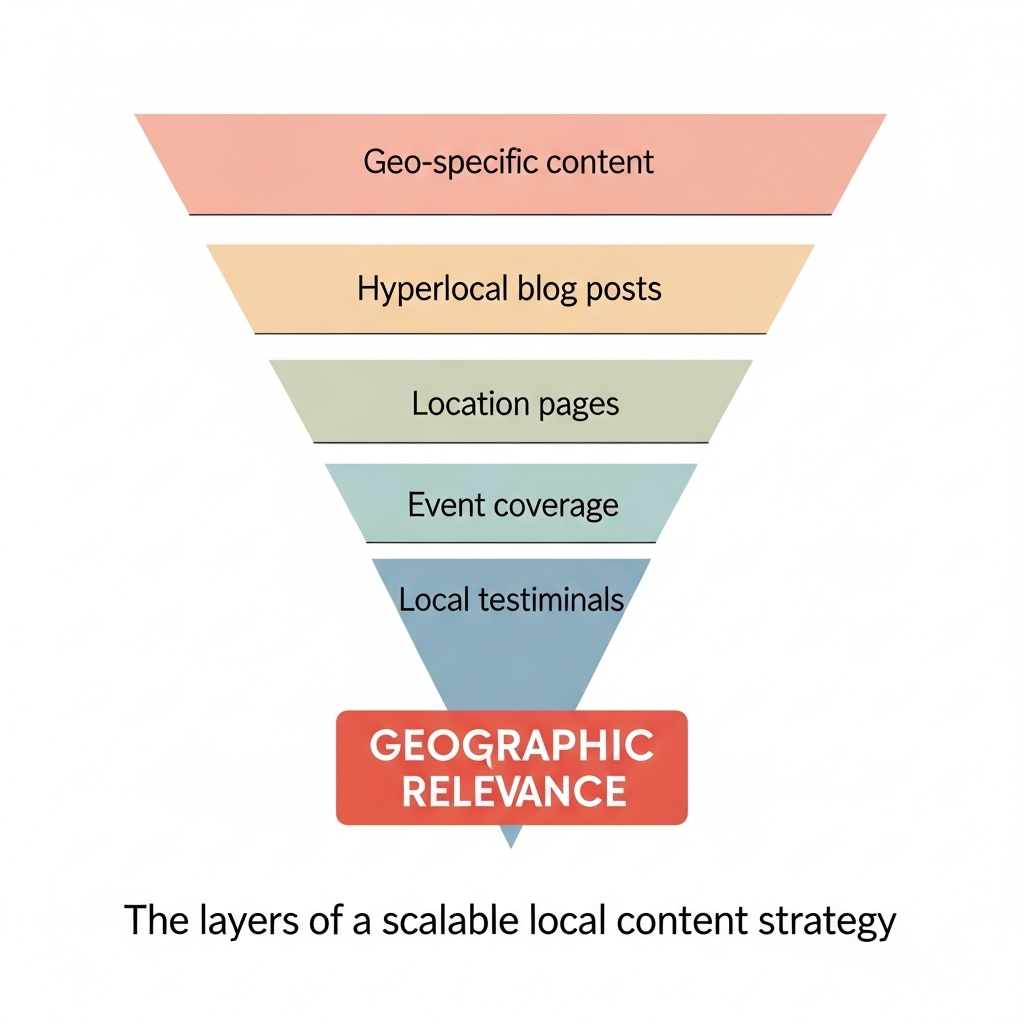
What Is Local Content Marketing?
Local content marketing is the process of creating and optimizing content according to a specific location or community.
It has two main functions:
- To get more visibility within local search results (through Google Maps, Local Pack, and organic SERPs)
- To gain the trust and relevance of local people by referring to their specific needs, interests, and context
Why Local Content Strategy Matters
When working on SEO for a local business or expanding location pages for a multilocation brand, the proper geospecific content will:
- Enhance rankings on “near me” and city-based queries
- Increase click-through rates by appearing more relevant
- Support conversion rates by speaking directly to a community’s context
- Help build local topical authority, which Google rewards with better placement
Local SEO Content:
Generic SEO copy won’t cut it for hyperlocal rankings particularly in competitive service areas.
That’s why your strategy should include:
- Localized clusters of keywords (e.g., “best Digital Marketing Service in Ahmedabad“)
- Community mentions and regional terms
- Locally optimized headings, alt text, and internal linkings
The closer your content seems to fit in that spot, the more both Google and local people will trust it.
Bonus Tip: Align Content with Local Intent Types
Different regions may have different search behaviors; in some places, people may look for “emergency AC repair,” while in others, it’s “budget AC installation.” Understand this intent gap early through localized keyword research.
2. Creating Effective Location Pages
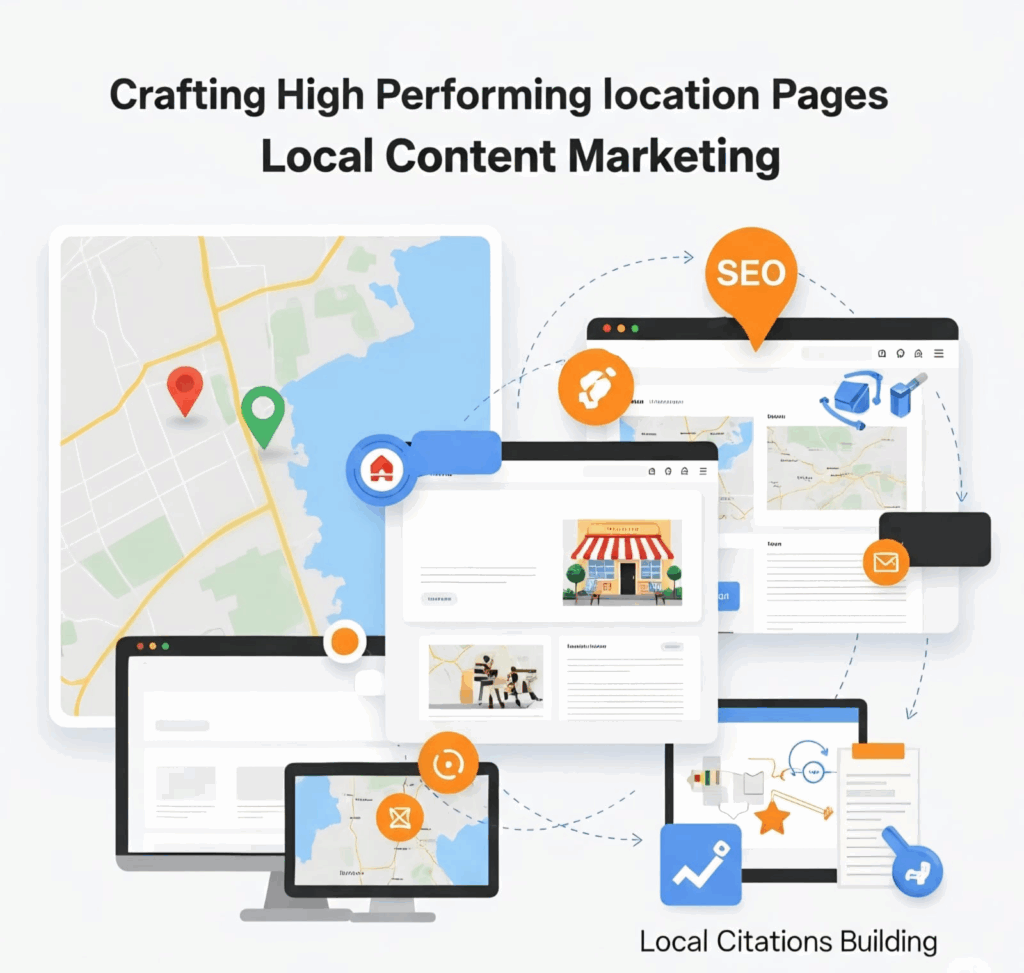
Location pages are the foundation of an effective local content marketing strategy. They are SEO-optimized landing pages that indicate relevance to users and search engines about particular geographies, if you’re going after one city or hundreds.
What Are Location Pages?
A location page is a dedicated webpage for a specific area (city, town, or neighborhood) that provides all relevant business information custom to that location.
For example, → highlights services, hours, testimonials, and events for Dallas customers.
These pages serve both discovery and conversion purposes.
Why Location Pages Matter
Well-optimized location pages directly support your visibility in:
- Google’s Local Pack
- Map results
- Localized organic rankings
- “Near me” mobile queries
They also provide a consistent, conversion-friendly landing space for:
- Local PPC campaigns
- Directory citations
- Social and email links
Without these pages, you’re likely cannibalizing your own visibility or sending users to a generic homepage that doesn’t address their local needs.
Key Elements of a High-Performing Location Page
| Element | Why It Matters |
| Unique Page URL | Signals specificity (e.g., /locations/pune) |
| City + Service in Title Tag | Increases keyword targeting and CTR |
| Localized H1 and Intro | Reinforces geographic relevance |
| Embedded Map + Directions | Helps mobile users and supports Google Maps SEO |
| NAP (Name, Address, Phone) | Consistency is critical for local SEO rankings |
| Testimonials from That City | Increases trust and relevance |
| Local Team or Office Images | Improves E-E-A-T and UX |
| Service-Specific FAQs | Captures long-tail search intent |
Google rewards location pages that look, feel, and sound like they were written for that city, not copy-pasted with just the place name swapped.
Pro Tip: Don’t Keyword Stuff (Geo-Contextualize)
It’s not enough to repeat “plumber in Chicago” ten times. Instead, build in geo-specific content like
- References to local events or regulations
- Mentions of nearby landmarks
- FAQs or testimonials unique to that market
Do you want to raise your local rankings in more than one city ?
3. Hyperlocal Content Development Process
In competitive local markets, having basic city-level pages isn’t enough. Hyperlocal content goes a step further, zooming in on specific neighborhoods, communities, or even street-level landmarks to create deeply relevant content that resonates with nearby users.
What Is Hyperlocal Content?
Hyperlocal content refers to content created for an extremely specific geographic area like a suburb, district, or neighborhood rather than a broad city or state.
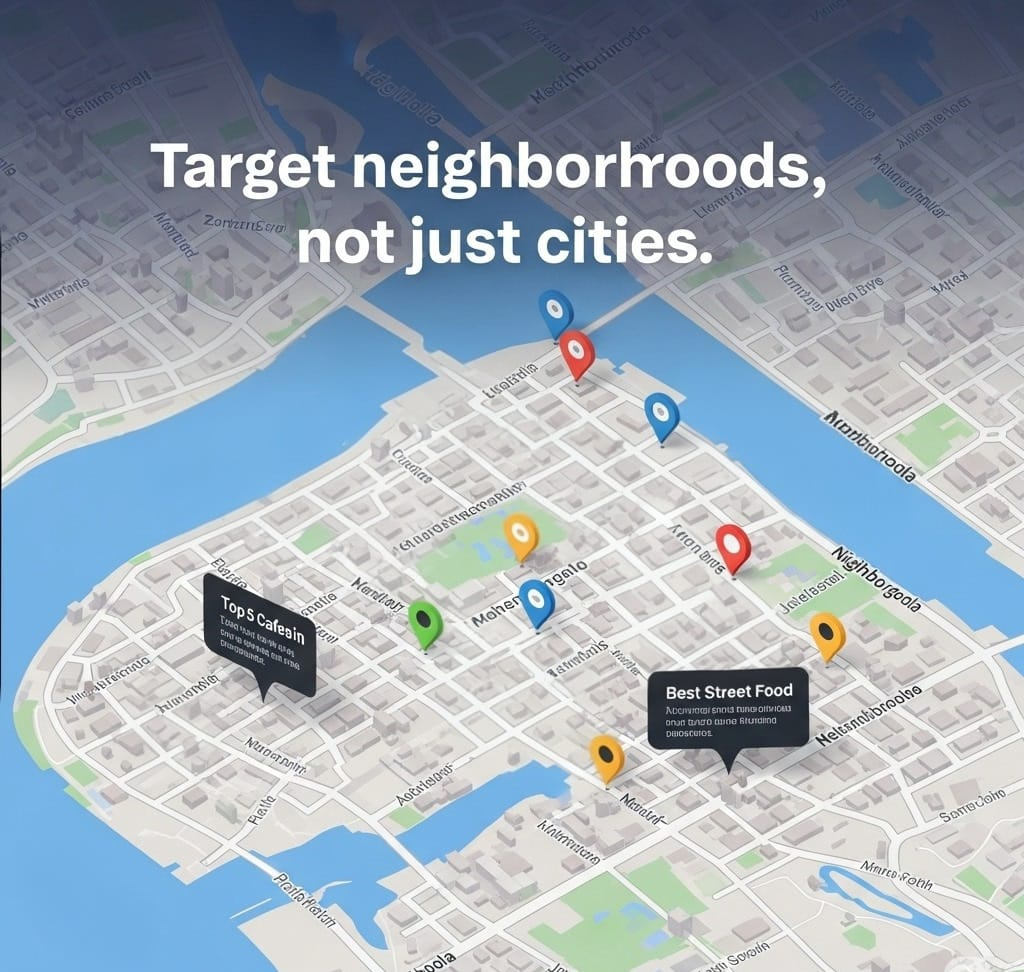
Examples include:
- “Top 5 Coffee Shops in Bandra East”
- “How Our Cleaning Service Helps Families in Juhu”
- “Upcoming Events in Chicago’s Lincoln Park This Weekend”
This approach is especially powerful for:
- Multi-location brands
- Franchise SEO strategies
- Service businesses targeting city sectors (e.g., South Delhi vs North Delhi)
Why Hyperlocal Content Works
Hyperlocal content helps you:
- Rank for long-tail local search queries (“best pizza near Shivaji Park”)
- Build trust with readers by showing real local knowledge
- Outrank national competitors by being more locally relevant
- Earn local backlinks from blogs, news sites, and community organizations
Google favors businesses that show “real-world” proximity and engagement, and this is exactly what hyperlocal content signals.
Pro Tip: According to Google, “near me” searches that include qualifiers like “tonight,” “open now,” or “near [neighborhood]” have increased significantly in the past few years.
How to Build It Without Burning Out
Hyperlocal content can seem overwhelming, especially for brands with dozens of locations.
Here’s how to properly scale it:
- Create reusable content templates, such as “Neighborhood Spotlight: [Area].”
- Use internal teams or franchisees to provide location insights
- Start with high-priority neighborhoods based on volume or strategic value
SEO Tip: Don’t Forget Schema Markup
Use the LocalBusiness and PostalAddress schema to reinforce relevance and location targeting, especially when embedding Google Maps or referencing neighborhoods.
4. Community News and Events Coverage
Building content that is community-focused is one of the best methods of establishing trust, relevance, and engagement, particularly when fighting for top spots in local SERPs. By providing local news and covering local events, your company is a part of community discussion and not merely another search engine listing.
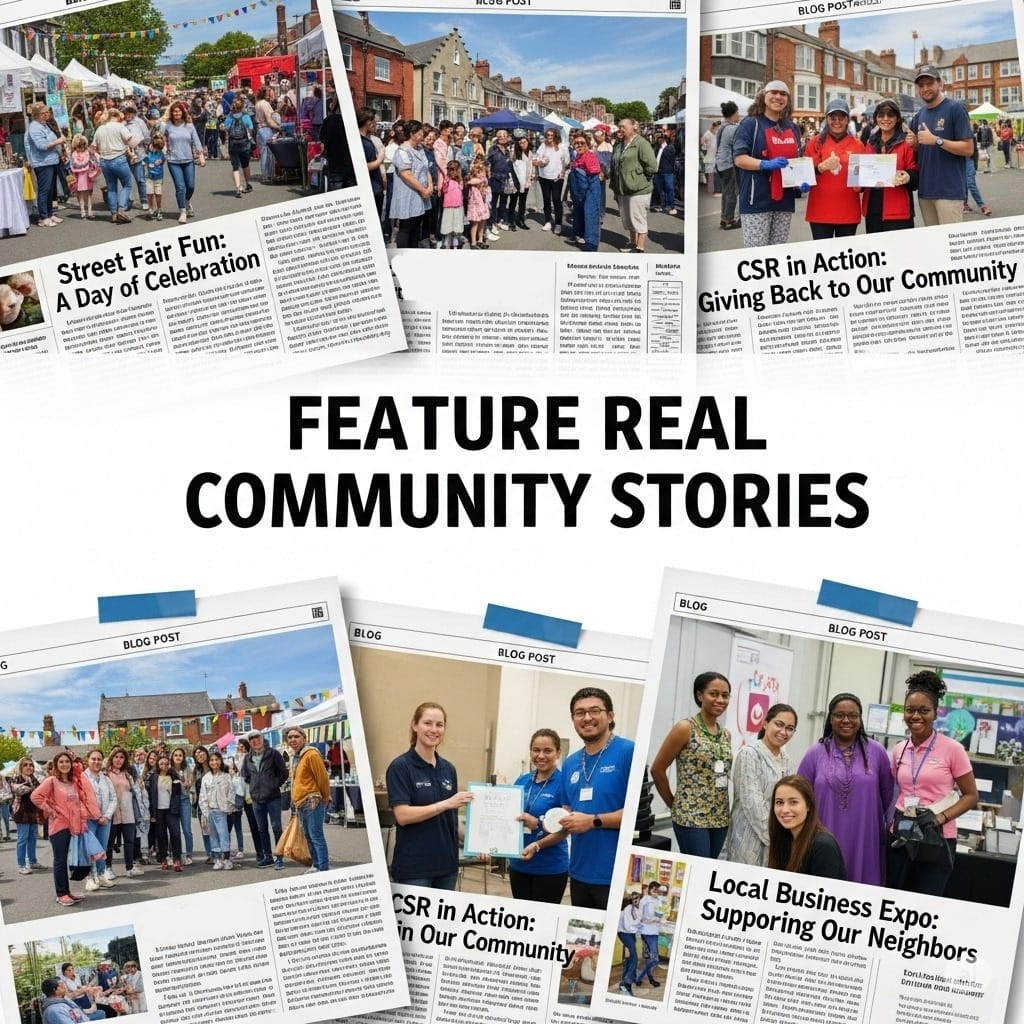
Why Community Content Matters for Local SEO
Search engines favor new, location-based content that shows topical relevance and authority. Reporting on local news, parades, fundraising campaigns, and school events assists:
- Signal geographic relevance to search engines
- Attract backlinks from local media and organizations
- Earn engagement from users who care about the local area
- Differentiate your brand from generic, corporate competitors
Think like a local publisher: Google’s helpful content update rewards businesses that demonstrate a genuine connection to their audience’s environment and there’s nothing more authentic than local coverage.
Types of Community Content You Can Create
| Format | Example |
| Event Spotlights | “5 Events to Attend This Weekend in Koramangala, Bangalore” |
| Business Collaborations | “We Sponsored the Thane Street Food Fest: Here’s What Happened” |
| Volunteer or CSR Highlights | “Our Team Cleaned Up Powai Lake: A Day in Photos” |
| Local Customer Features | “Meet Ramesh: Our 5-Year Customer from Andheri East” |
| Staff Member Spotlights | “Say Hello to Priya Our Location Manager in Gurugram” |
Where to Source Local Stories
- Hyperlocal news websites and city-focused cyber-newspapers
- School or college event calendars
- City event websites like BookMyShow or Eventbrite
- Your own team’s participation in community activities
Pro Tip: Partner with local influencers or microbloggers to co-create event coverage or community interviews; you’ll not only improve reach but also attract backlinks and mentions.
SEO Tip: Use Location Modifiers in Your Titles
Add neighborhood names, event types, and local dates in your blog titles and headers. For example, “Top Things to Do in Bandra This Weekend [July 2025]” is more optimized than “Weekend Events in Mumbai.”
5. Local Keyword Research Techniques
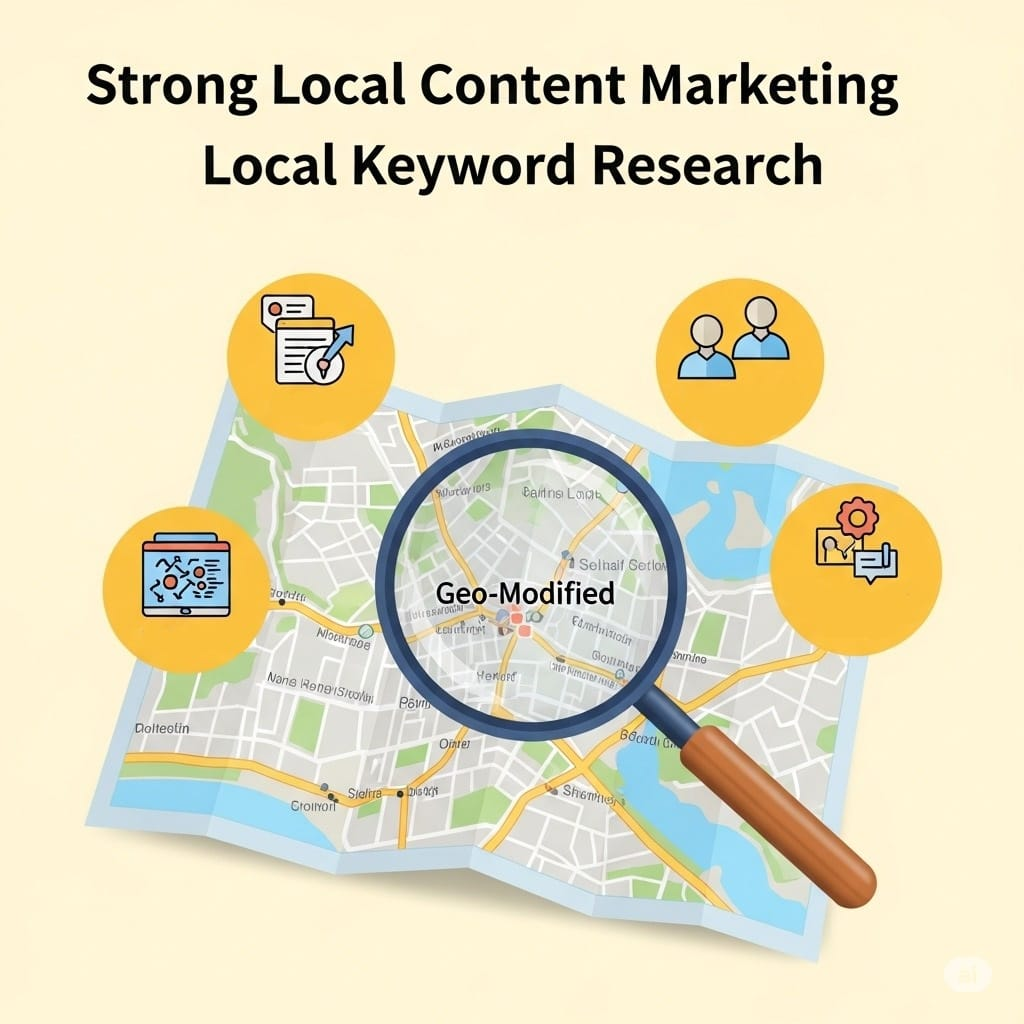
It is only once you know the words your audience is actually searching for non generic industry jargon, but geo-translated words that reflect local intent—that you can do effective local content marketing. Thoughtfully researching keywords is essential in such a situation.
Why Local Keyword Research Is Essential
Local SEO content, as opposed to national SEO, thrives on search intent associated with a particular region. You’re losing out on high-converting traffic if your content doesn’t use the search terms that people in that area use to find services.
Targeting local keywords effectively benefits you:
- Align content with real-world search behavior
- Drive qualified traffic with purchase or visit intent
- Create relevance signals for Google to rank your content in “near me” or map-pack queries
- Prioritize hyperlocal content opportunities at the neighborhood level
Tactics to Find Geo-Specific Keywords
| Research Method | What to Look For |
| Google Search Console | Queries already bringing local impressions or clicks |
| Google Autocomplete + “Near Me” Queries | Variants like “best bakeries in Powai” and “lawyer near me” |
| Google Trends (with regional filters) | Interest by city or region for services/events |
| People Also Ask / Related Searches | Intent-rich long-tail keywords (e.g., “Is Jayanagar safe at night?”) |
| GMB Questions & Reviews | Common phrases or pain points your audience repeats |
| Competitor Location Pages | Scan headings and content structure for recurring geo-modified terms |
| AnswerThePublic / AlsoAsked | Search behavior insights based on location and service intent |
Keyword Types to Target in Local SEO Content
| Keyword Type | Example | Where to Use |
| Service + Location | “chiropractor in Ahmedabad” | Core location/service pages, H1s |
| Long-Tail Local Intent | “best family dentist in Whitefield Bangalore” | Blog content, FAQs, featured snippets |
| Local Modifiers | “open now,” “near metro,” “24/7,” “in [ZIP code]” | Meta titles, CTA buttons, local landing pages |
| Event/Seasonal Terms | “summer camps in Chennai 2025,” “Christmas markets Mumbai” | Event blogs, promotional content |
Don’t just insert location names that reflect local language, culture, and context. For example, use “Sobo” instead of “South Mumbai” if that’s how locals search.
6. User-Generated Local Content Strategies
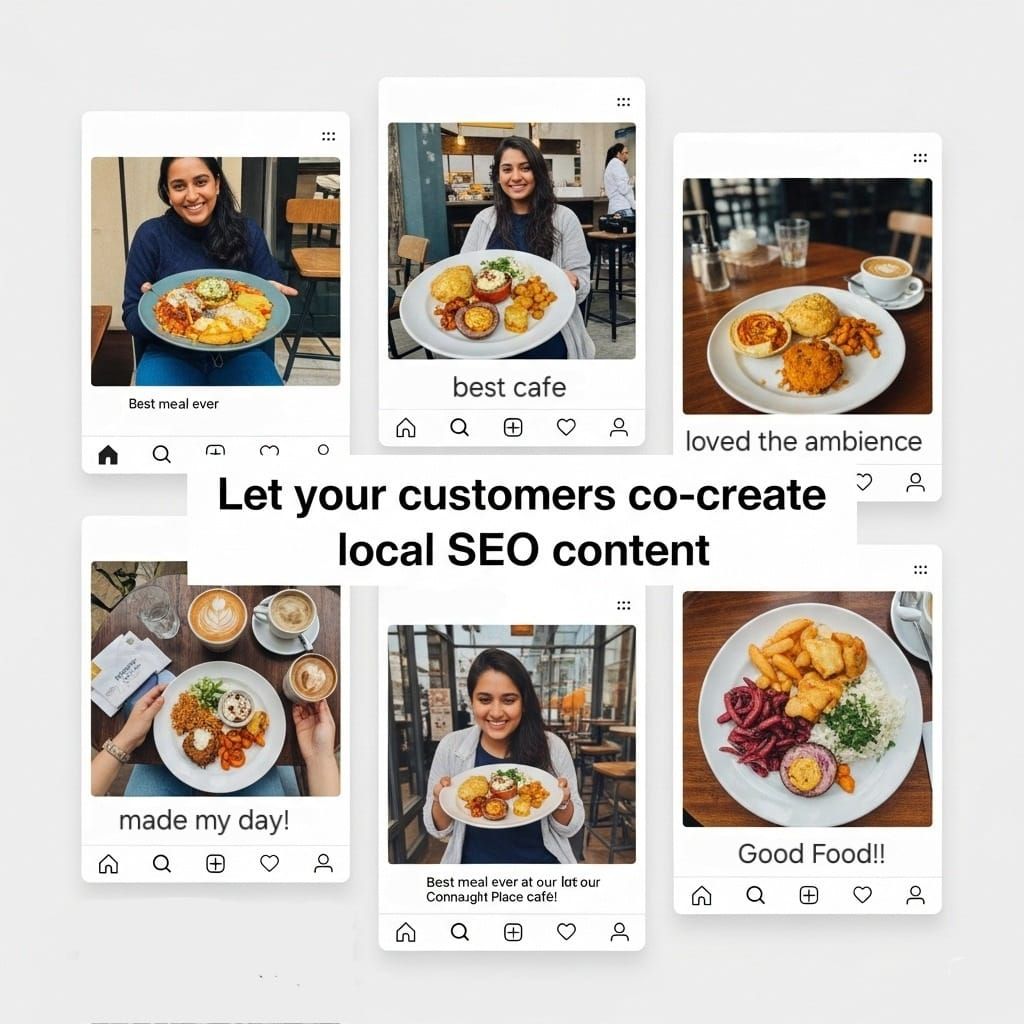
User-generated content (UGC) isn’t just for social proof, it’s one of the most powerful tools in a local content marketing strategy. When locals contribute stories, reviews, or media, they signal authenticity, relevance, and trust all of which Google’s local ranking systems favor.
Why UGC Matters for Local SEO Content
In both search engine (and human) pleasing ways, active community-based feedback reinforces brand authority and improves your geo-specific content:
- With real voices and in-market presence, E-E-A-T is Experience, Expertise, Authority, and Trust.
- Helps brands differentiate themselves in local packs, map listings, and community-based search
- Encourages engagement and shares especially for hyperlocal content
Google prioritizes local relevance. UGC that includes local language, landmarks, and cultural touchpoints makes your content stand out algorithmically and emotionally.
Types of User-Generated Local Content You Can Leverage
| UGC Type | Example | Where to Use |
| Customer Testimonials | “This salon in Kothrud fixed my hair for a wedding in under 30 mins!” | Location pages, review widgets, service pages |
| Local Photos/Videos | Customer pictures of meals, storefronts, or events | Google Business Profile, social feeds, blog embeds |
| Community Stories | Local volunteers talking about a cleanup your brand sponsored | Blog posts, landing pages, “In the Community” sections |
| Q&A Content | Real users asking about parking, timings, pet policies, etc. | FAQ pages, GMB, social highlights |
| Branded Hashtags/Challenges | #ShopLocalMumbai photos or contests with regional prizes | Instagram, Facebook, blog roundups |
How to Encourage High-Quality UGC
- Create a prompt or story hook: Ask questions locals can respond to (“What’s your favorite dish at our Mumbai branch?”)
- Feature contributors on your site or social media to motivate participation
- To conveniently collect content at physical locations, use QR codes or in-store signage.
- Offer rewards like shoutouts, discounts, or contest participation.
Content Guidelines for UGC
To ensure the content aligns with your local SEO content goals:
- Moderate for accuracy, brand safety, and relevance
- Prioritize content that includes location mentions, landmarks, or community terms
- Optimize images with ALT text including geo-modifiers
- Add internal links to relevant location pages or blog content
Tip: For agencies and multi-location brands: Build repeatable UGC playbooks per city. What works in Indore may not resonate in Kochi local context is everything.
7. Local Content Distribution Channels
Producing local content is half the work; the distribution is what makes it visible, engaging, and SEO-effective. Even the most locally targeted content can flounder if it doesn’t get in front of the right eyeballs on the right platforms.
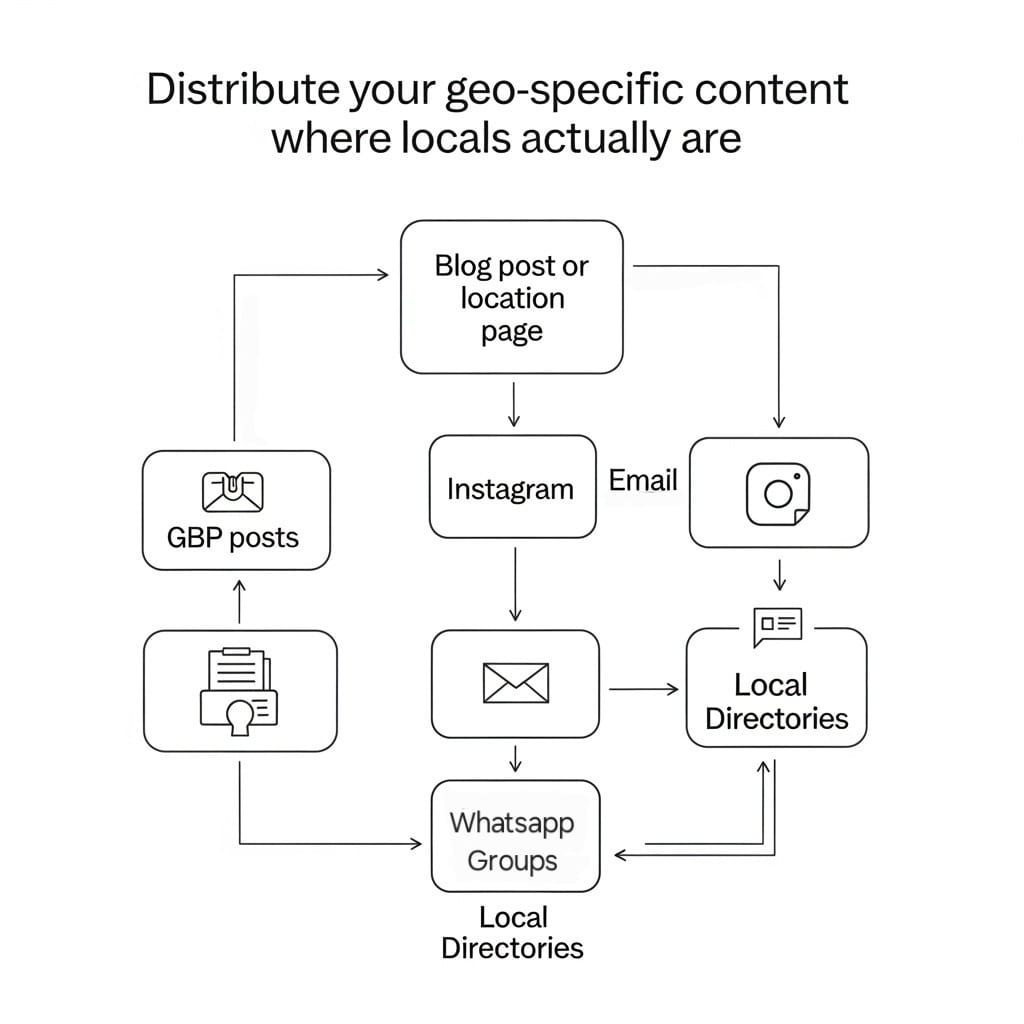
A local content marketing strategy involves a multi-channel distribution strategy aimed at reaching and supporting your hyperlocal community, increasing relevance in the community, and ranking support through off-page indications.
Why Distribution Matters in Local SEO Content
- Increase brand awareness on search, social, and local platforms
- Enhances engagement signals such as clicks, shares, and comments
- Builds backlink opportunities through local mentions and syndication
- Supports geo-specific authority by reinforcing your presence in a location
How to Build a Local Distribution Plan
- Map Each Content Type to a Channel
- Location page? → Google Business Profile, local directories
- Event recap blog? → Community forums, Instagram, email list
- Geo-Target Everything
- Add UTM parameters by city, state, or store ID
- Tag posts with location hashtags like #DelhiEats or #PuneTech
- Repurpose Smartly
- Turn community blog posts into carousels, reels, or infographics
- Break down long-form guides into bite-sized posts for stories or local press releases
- Track Performance per Channel & Region
- Use GA4’s traffic acquisition report to segment by source and location
- Monitor referral traffic from directories and local partnerships
Pro Tip: Set up location-specific GA4 views or filters to isolate performance and optimize future campaigns.
8. Measuring Local Content Performance
Once your local content marketing campaigns are live, tracking performance is critical. Without clear metrics, it’s impossible to know what’s working, where to scale, or what needs improvement especially when managing multiple location pages or regional campaigns.
Most Important Measurements for Estimating Local SEO Content
| Metric | What It Shows | Why It Matters for Local SEO |
| Organic Traffic (GA4) | Visits from search engines to local content | Measures search visibility for hyperlocal queries |
| User Engagement | Avg. session duration, engagement rate, bounce rate | Indicates content relevance and user interest |
| New vs. Returning Users | How many local users are new vs. repeat visitors | Shows acquisition vs. loyalty trends by location |
| Keyword Rankings | SERP positions for location-specific terms | Directly reflects SEO efforts on local intent keywords |
| Conversion Rate | Form fills, calls, store visits from local pages | Links content performance to business outcomes |
| Google Business Insights | Clicks, calls, and direction requests from GBP posts | Tracks how local content drives real-world engagement |
Example: If your blog on “Top Fitness Spots in Mumbai” ranks #1 and drives traffic that converts into local gym memberships, it’s high-ROI local content.
Tools to Measure Local Content Impact
- GA4 Traffic Acquisition Report
→ Use dimensions like Session Source/Medium and filters by city or landing page to isolate traffic from local campaigns.
- Google Search Console (GSC)
→ Track impressions and clicks for geo-specific keywords like “dentist in Nagpur” or “best cafés in Bandra.”
- GBP Performance Dashboard
→ Check visibility, call clicks, and post engagement for your location profiles.
- Rank Tracking Software
→ Tools like Semrush, BrightLocal, or Local Falcon can monitor local keyword rankings and map pack appearances.
- CRM/Lead Tracking Tools
→ Measure content-driven inquiries by source, location, or UTM code to calculate ROI.
Setting KPIs for Local Content
Here’s how to set realistic, performance-focused KPIs for local SEO content:
| Content Type | KPI Examples |
| Location Page | 10% MoM growth in organic sessions, 3% conversion rate |
| Hyperlocal Blog | Top 10 keyword rankings, 5 min avg. session duration |
| Event Recap / Community Post | 200+ clicks from social or GBP, 2 backlinks from local sites |
| Local Guide or Listicle | 30% traffic from mobile users in target city |
Pro Tip: Slice performance reporting by city, service area, or language to reveal secret trends and opportunities.
Conclusion: Make Local Content A Growth Driver
The future of content marketing isn’t just about being found, it’s about being locally relevant.
Whether you’re developing pages for 50 service areas, creating hyperlocal content that appeals to neighborhood interests, or publishing news from community events, your content strategy has a direct impact on visibility, trust, and conversions.
Following an organized process based on local keyword research, community signals, and performance monitoring, your brand can reliably get in front of the right local audience at the right time.
Local SEO copy isn’t only search engine optimized. It’s designed for people and the neighbors, customers, and local allies that make your business tick every day.